Within Harmony
Why Major and Minor Chords Feel Different Across Cultures
Cultural background, musical exposure, and personal experience influence how listeners interpret major and minor chords emotionally.
On this page
- Western conventions in chord perception
- Cross cultural studies on consonance and dissonance
- Influence of age, expertise, and musical exposure
Page outline Jump by section
Introduction
Listeners’ emotional responses to major and minor chords are not fixed biological reactions; instead, they are shaped strongly by cultural context, musical exposure, and individual experience. While Western traditions often teach that major chords “sound happy” and minor chords “sound sad,” evidence from music cognition research reveals that these associations vary with cultural familiarity, exposure to specific musical systems, and expertise. In some cultures with little to no exposure to Western harmony, people do not automatically prefer major over minor or interpret one as universally positive and the other as negative. This section synthesises empirical findings on how culture and listener background influence major–minor emotional perception within the broader framework of harmony’s role in music emotion.[Nature]
Western Convention and Emotional Categorisation
In Western classical and popular music traditions, major chords are statistically more common, more stable in the tonal syntax, and thus culturally reinforced as associated with pleasantness and positive affect, while minor chords, being relatively less frequent and acoustically less “stable,” are culturally linked with sadness or introspective affect. This conventional association emerges not solely from intrinsic acoustic properties but from repeated pairing in music listening and composition within a Western harmonic idiom. Studies with Western listeners frequently find that major chords are rated as more pleasant and less tense than minor chords, even when tested in isolation or at the ends of chord sequences that imply tonal completion. [ScienceDirect]sciencedirect.comModerating effects of chord progressions on the emotional experience of major and minor chords - ScienceDirectMarch 1, 2025…
However, as the literature review on the major–minor dichotomy notes, neural and psychological responses are heavily influenced by subjective perception, including cultural exposure, age, and expertise, rather than being fixed, universal responses to these chord types. [ScienceDirect]sciencedirect.comModerating effects of chord progressions on the emotional experience of major and minor chords - ScienceDirectMarch 1, 2025…
Cross‑Cultural Findings: Universality and Variation
A key insight from cross‑cultural music research is that listeners without exposure to Western harmonic systems do not automatically attribute the same emotional meanings to major and minor chords that Western listeners do. The seminal study of native Amazonians (the Tsimané and related groups) found that, unlike Western listeners who consistently prefer consonant intervals and chords, these groups often show no aversion to dissonant combinations and no strong preference for consonance, suggesting that emotional valence judgments tied to harmonic conventions are not universal but culturally learned. [Nature]nature.comCultural familiarity and musical expertise impact the pleasantness of consonance/dissonance but not its perceived tension | Scienti…
Similarly, other cross‑cultural studies involving participants from different musical cultures (for example, researchers working with tribal groups with limited exposure to Western music) have reported little or no consistent association between major/minor cadences and emotional labels such as “happy” versus “sad.” In contrast, listeners familiar with Western harmony typically make such associations. These results indicate that simply hearing a particular chord quality does not innately evoke a specific emotional valence unless that association has been learned through cultural exposure and musical experience. [PLOS]journals.plos.orgHarmonic organisation conveys both universal and culture-specific cues for emotional expression in music | PLOS OneJanuary 13, 2021…
Role of Familiarity, Expertise, and Listener Background
Beyond broad cultural background, familiarity with a given musical system and formal training also shape how major and minor chords are perceived. A study examining consonance and dissonance perception showed that cultural familiarity and musical expertise modulate how pleasant or harmonious listeners find chords, even if they do not dramatically alter perceived tension. Specifically, cultural familiarity significantly affected correlations among perceptual concepts like consonance, pleasantness, and preference across both musicians and non‑musicians, though the effect patterns differed with expertise level. This underscores that experience with particular musical styles influences not just preference but how emotional meaning is parsed in sound combinations. [Nature]nature.comIndifference to dissonance in native Amazonians reveals cultural variation in music perception | Nature…
These findings align with broader analyses suggesting that the typical Western major‑minor emotional framing arises from an interplay between psychoacoustic factors (like roughness, harmonicity) and cultural learning — neither alone suffices to explain listeners’ emotional interpretations across cultural contexts. [ScienceDirect]sciencedirect.comModerating effects of chord progressions on the emotional experience of major and minor chords - ScienceDirectMarch 1, 2025…
Listener Variability: Age and Development
Although less extensively explored than cultural exposure, age and developmental experience also contribute to how emotional connotations of major and minor modes are perceived. Reviews of research on major–minor perception note that sensitivity and affective evaluation are influenced by both age and expertise, suggesting that younger listeners or those with less exposure to structured harmonic systems may not share the same emotional associations as more experienced listeners. These individual differences further emphasise that emotional responses to harmony are learned and dynamic, shaped by cumulative listening history rather than fixed human universals. [ScienceDirect]sciencedirect.comModerating effects of chord progressions on the emotional experience of major and minor chords - ScienceDirectMarch 1, 2025…

Summary
Across cultures and listener groups, emotional interpretations of major and minor chords are not predetermined by the acoustic properties alone but are deeply intertwined with cultural familiarity, exposure to specific musical traditions, and individual musical experience. Western associations of major with positive emotion and minor with negative emotion reflect a learned convention within a tonal system rather than a universal perceptual response. While some aspects of chord perception — such as basic discrimination between consonance and dissonance — may be partly rooted in psychoacoustic processing, the emotional valence attributed to specific harmonic qualities emerges largely from cultural context and listening history.[Nature]nature.comCultural familiarity and musical expertise impact the pleasantness of consonance/dissonance but not its perceived tension | Scienti…
Amazon book picks
Further Reading
Books and field guides related to Why Major and Minor Chords Feel Different Across Cultures. Use these as the next step if you want deeper reading beyond the article.
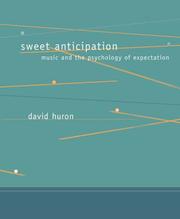
Sweet Anticipation
Helps explain why emotional responses differ across listening backgrounds.

Music, Language, and the Brain
Examines how culture and learning shape musical perception.

eBay marketplace picks
Marketplace Samples
Example marketplace items related to this page. Use the search link to explore similar finds on eBay.


Endnotes
1.
Source: nature.com
Link:https://www.nature.com/articles/s41598-020-65615-8
Source snippet
Cultural familiarity and musical expertise impact the pleasantness of consonance/dissonance but not its perceived tension | Scienti...
2.
Source: nature.com
Link:https://www.nature.com/articles/nature18635
Source snippet
Indifference to dissonance in native Amazonians reveals cultural variation in music perception | Nature...
3.
Source: sciencedirect.com
Link:https://www.sciencedirect.com/science/article/pii/S0001691825000034
Source snippet
Moderating effects of chord progressions on the emotional experience of major and minor chords - ScienceDirectMarch 1, 2025...
Published: March 1, 2025
4.
Source: sciencedirect.com
Title: ScienceDirect The major-minor mode dichotomy in music perception
Link:https://www.sciencedirect.com/science/article/pii/S1571064524001672
Source snippet
The major-minor mode dichotomy in music perception - ScienceDirect...
5.
Source: journals.plos.org
Link:https://journals.plos.org/plosone/article?id=10.1371%2Fjournal.pone.0244964
Source snippet
Harmonic organisation conveys both universal and [culture]({{ 'culture/' | relative_url }})-specific cues for emotional expression in music | PLOS OneJanuary 13, 2021...
Published: January 13, 2021
6.
Source: sciencedirect.com
Link:https://www.sciencedirect.com/science/article/pii/S1571064522000665
Source snippet
Consonance and dissonance perception. A critical review of the historical sources, multidisciplinary findings, and main hypo...
7.
Source: sciencedirect.com
Title: The preattentive processing of major vs
Link:https://www.sciencedirect.com/science/article/abs/pii/S0304394010014291
Source snippet
minor chords in the human brain: An event-related potential study - ScienceDirectJanuary 10, 2011 — NEUROSCIENCE LETTERS Volume 487, Issu...
Published: January 10, 2011
Additional References
8.
Source: pure.au.dk
Link:https://pure.au.dk/portal/en/publications/emotion-processing-of-major-minor-and-dissonant-chords-a-function/
Source snippet
Aarhus UniversityEMOTION PROCESSING OF MAJOR, MINOR, AND DISSONANT CHORDS: A FUNCTIONAL MAGNETIC RESONANCE IMAGING STUDY. * Karen Johanne...
9.
Source: pure.au.dk
Link:https://pure.au.dk/portal/da/publications/emotional-connotations-of-major-and-minor-musical-chords-in-music/
Source snippet
connotations of major and minor musical chords in musically untrained listeners - Aarhus UniversitetMarch 1, 2003 — EMOTIONAL CONNOTATION...
Published: March 1, 2003
10.
Source: pure.au.dk
Link:https://pure.au.dk/portal/en/publications/emotional-connotations-of-major-and-minor-musical-chords-in-music
Source snippet
connotations of major and minor musical chords in musically untrained listeners - Aarhus UniversityMarch 1, 2003 — EMOTIONAL CONNOTATIONS...
Published: March 1, 2003
12.
Source: researchportal.helsinki.fi
Link:https://researchportal.helsinki.fi/en/publications/emotional-connotations-of-major-and-minor-musical-chords-in-music
Source snippet
connotations of major and minor musical chords in musically untrained listeners - University of HelsinkiEMOTIONAL CONNOTATIONS OF MAJOR A...
13.
Source: cir.nii.ac.jp
Link:https://cir.nii.ac.jp/crid/1360298765114259200
Source snippet
of Major-Minor and Consonance-Dissonance | CiNii ResearchApril 1, 2017 — NEUROCOGNITION OF MAJOR-MINOR AND CONSONANCE-DISSONANCE DOI PDF...
Published: April 1, 2017
14.
Source: pubmed.ncbi.nlm.nih.gov
Link:https://pubmed.ncbi.nlm.nih.gov/32457382/
Source snippet
2020 May 26;10(1):8693. doi: 10.1038/s41598-020-65615-8. CULTURAL FAMILIARITY AND MUSICAL EXPERTISE IMPACT THE PLEASANTNESS OF CONSONANCE...
15.
Source: pubmed.ncbi.nlm.nih.gov
Link:https://pubmed.ncbi.nlm.nih.gov/24957406/
Source snippet
2015 Mar;15(1):15-31. doi: 10.3758/s13415-014-0309-4. MUSICAL CHORDS AND EMOTION: MAJOR AND MINOR TRIADS ARE PROCESSED FOR EMOTION David...
16.
Source: pmc.ncbi.nlm.nih.gov
Link:https://pmc.ncbi.nlm.nih.gov/articles/PMC10697574/
Source snippet
influences conscious appraisal of, but not automatic aversion to, acoustically rough musical intervals - PMCDecember 5, 2023 — INTRODUCTI...
Published: December 5, 2023
17.
Source: pmc.ncbi.nlm.nih.gov
Link:https://pmc.ncbi.nlm.nih.gov/articles/PMC3073321/
Source snippet
July 1, 2008 — 1.3 CHORD CATEGORIZATION Testing these hypotheses requires an experimental design that would directly assess this perce...
Published: July 1, 2008
Topic Tree