Within Music
Why Protest Songs Still Mobilize People
Protest songs help turn individual anger, grief or hope into a public voice that people can gather around.

On this page
- Chant, chorus and solidarity
- Political memory in songs
- Risks of simplification and appropriation
Page outline Jump by section
Introduction
Protest songs are not just lyrical expressions of dissent; they are collective instruments that help transform individual feelings of outrage, hope, grief or aspiration into shared public voices that can move crowds, shape movements, and build unity. Across centuries and around the world, from street ballads to anthems at mass rallies, protest music has played a distinct social role: it helps people feel part of something larger than themselves, reinforces shared identities, and cultivates a sense that collective action can matter. Understanding how this works requires looking at the mechanics of music in protest settings, the memory and repetition that sustain movements, and also the challenges and limits inherent in using songs to build power.
Chant, Chorus and Solidarity
When people sing together in a protest setting, something more than sound is generated: a collective emotional experience that can strengthen solidarity and morale. Sociological research on collective singing during intense protests finds that participants use group singing to evoke emotions that raise morale, help them vent sorrow and anger, and foster a sense of closeness both within the group and, at times, even with opponents. Singing together can bring about a sense of spiritual transcendence and shared purpose that is difficult to achieve through isolated action alone.[Sage Journals]journals.sagepub.comSage JournalsThe Sociological Role of Collective Singing during Intense Moments of Protest: The Disengagement from the Gaza Strip - Moshe…
This effect relates to classic ideas in the sociology of music and protest: the Canadian sociologist R. Serge Denisoff distinguished between “magnetic” protest songs, which attract people to a movement and promote group commitment, and “rhetorical” songs, which focus on persuading external audiences. “Magnetic” songs—with their repetitive refrains and simple structures—are often the ones that become choruses of solidarity that people chant together at marches or rallies, reinforcing a shared identity and collective intent.[Wikipedia]WikipediaProtest songProtest song
Such collective performance does more than communicate information; it embodies the protest’s emotional core. The act of shared singing reinforces bonds between participants, gives emotional shape to shared grievances, and can even help to sustain morale when protests are long, difficult, or risky.
Political Memory in Songs
A key way protest songs build collective power is through their connection to memory and historical continuity. Songs can act as portable monuments to past struggles, allowing later movements to draw on earlier histories and adapt their messages. For example, the Italian partisan song Bella ciao has been adopted, adapted and re‑used by diverse activist movements globally; its capacity to be reinterpreted—what scholars call portability—helps link contemporary causes with historical legacies of resistance.[Sage Journals]journals.sagepub.comSage JournalsThe Sociological Role of Collective Singing during Intense Moments of Protest: The Disengagement from the Gaza Strip - Moshe…
This dynamic shows how music serves not just as immediate expression but as cultural memory. When movements reuse classic protest songs, or borrow melodic motifs or refrains, they situate present struggles within a longer arc of resistance. This creates a sense of continuity and shared lineage that can bolster participants’ belief that their actions are part of something enduring and significant.
Moreover, feminist and cultural scholars have emphasised that songs embed emotion and affect in social memory. When people remember a protest song, they recall not just its lyrics but how it felt to sing it together, to be part of a crowd in that moment. These emotional memories can shape future participation and identity within a movement, reinforcing the sense that collective action has meaning beyond the immediate event.[Directory of Open Access Journals]doaj.orgDirectory of Open Access JournalsThe Soundtrack of Revolution Memory, Affect, and the Power of Protest Songs – DOAJJune 1, 2013…

Risks of Simplification and Appropriation
While protest songs can be powerful tools for collective mobilisation, they also carry risks that can affect how—or whether—they build power. One challenge is simplification: effective protest songs often rely on clear, repeated refrains and uncomplicated messages. This can help unify large crowds quickly, but it also runs the risk of flattening complex issues into catchy slogans that lack nuance or depth. Some critics argue that this simplification can make protest slogans seem superficial or disconnected from deeper political analysis when used outside their original context.
Another modern challenge is appropriation and fragmentation in a digital age. Platforms like TikTok enable rapid dissemination of protest music, but social media’s connective action logic can result in songs being detached from the movements that gave them meaning, repackaged primarily as personal expression or entertainment rather than tools of collective mobilisation. Research on digital protest music notes this dual potential: it can build unity and positive self‑definition within communities of shared identity, but it can also detach songs from their political context and limit their mobilisation potential.[Sage Journals]journals.sagepub.comSage JournalsThe Sociological Role of Collective Singing during Intense Moments of Protest: The Disengagement from the Gaza Strip - Moshe…
Finally, there are debates within movements about whose songs get sung and why. Traditional protest anthems may resonate more strongly with certain demographics or historical memories than with others, potentially excluding some voices or experiences even as they unify others. Music can build solidarity, but it can also reflect the power structures and cultural norms of the groups that adopt it.

Conclusion
Protest songs build collective power by turning individual sentiments into shared voices of dissent, reinforcing solidarity through collective performance, and anchoring movements within broader historical memories of resistance. They work at the intersection of emotion, identity, and social communication, helping participants feel part of something larger while signalling to outsiders that a collective force exists. At the same time, the ways songs simplify, travel and are repurposed underscore that their power is neither automatic nor unambiguous: it depends on cultural context, emotional resonance, and the ongoing work of movements to make music a living part of collective struggle.[Sage Journals]journals.sagepub.comSage JournalsThe Sociological Role of Collective Singing during Intense Moments of Protest: The Disengagement from the Gaza Strip - Moshe…
Amazon book picks
Further Reading
Books and field guides related to Why Protest Songs Still Mobilize People. Use these as the next step if you want deeper reading beyond the article.
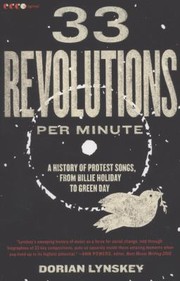
33 Revolutions Per Minute A History Of Protest Songs From Bil...
Provides rich examples of collective singing traditions.


eBay marketplace picks
Marketplace Samples
Example marketplace items related to this page. Use the search link to explore similar finds on eBay.




Endnotes
1.
Source: journals.sagepub.com
Link:https://journals.sagepub.com/doi/abs/10.1177/0038038511416160
Source snippet
Sage JournalsThe Sociological Role of Collective Singing during Intense Moments of Protest: The Disengagement from the Gaza Strip - Moshe...
2.
Source: Wikipedia
Title: Protest song
Link:https://en.wikipedia.org/wiki/Protest_song
3.
Source: journals.sagepub.com
Title: Sage Journals‘Bella ciao’: A portable monument for transnational activism
Link:https://journals.sagepub.com/doi/10.1177/13678779221145374
Source snippet
Daniele Salerno, Marit van de Warenburg, 2023January 9, 2023...
Published: January 9, 2023
4.
Source: doaj.org
Link:https://doaj.org/article/9927c5760c8f4585aa3dc3650a96321f
Source snippet
Directory of Open [Access]({{ 'access/' | relative_url }}) JournalsThe Soundtrack of Revolution Memory, Affect, and the Power of Protest Songs – DOAJJune 1, 2013...
Published: June 1, 2013
5.
Source: journals.sagepub.com
Link:https://journals.sagepub.com/doi/10.1177/20563051221094769
Source snippet
Sage JournalsDefiant Amplification or Decontextualized Commercialization? Protest Music, TikTok, and Social Movements - Olivia Sadler, 20...
6.
Source: cultureunbound.ep.liu.se
Link:https://cultureunbound.ep.liu.se/article/view/2044
Source snippet
Soundtrack of Revolution Memory, Affect, and the Power of Protest Songs | [Culture]({{ 'culture/' | relative_url }}) UnboundJune 12, 2013 — THE SOUNDTRACK OF REVOLUTION MEM...
Published: June 12, 2013
Additional References
7.
Source: etheses.lse.ac.uk
Link:https://etheses.lse.ac.uk/4370/
Source snippet
of feminist protests in London: collective identity construction through sonic resonance - LSE Theses OnlineSOUNDSCAPES OF FEMINIST PROTE...
8.
Source: research-portal.uea.ac.uk
Title: uea.ac.uk’Fight the Power’: the politics of music and the music of politics
Link:https://research-portal.uea.ac.uk/en/publications/fight-the-power-the-politics-of-music-and-the-music-of-politics
Source snippet
University of East Anglia'FIGHT THE POWER': THE POLITICS OF MUSIC AND THE MUSIC OF POLITICS John Street * Politics & International Relati...
10.
Source: research-portal.uea.ac.uk
Title: our subversive voice the history and politics of english protest
Link:https://research-portal.uea.ac.uk/en/publications/our-subversive-voice-the-history-and-politics-of-english-protest-
Source snippet
Subversive Voice: The History and Politics of English Protest Songs, 1600-2020 - University of East AngliaOUR SUBVERSIVE VOICE: THE HISTO...
12.
Source: research-portal.uu.nl
Title: nl‘Bella ciao’: A portable monument for transnational activism
Link:https://research-portal.uu.nl/en/publications/bella-ciao-a-portable-monument-for-transnational-activism/
Source snippet
uu.nl‘Bella ciao’: A portable monument for transnational activism - Utrecht UniversityMarch 1, 2023 — ‘BELLA CIAO’: A PORTABLE MONUMENT F...
Published: March 1, 2023
13.
Source: colab.ws
Title: Stewart ^{1} Hide authors affilia
Link:https://colab.ws/articles/10.1080%2F10510979109368340
Source snippet
The ego function of protest songs: An application of Gregg's theory of protest rhetoric | CoLabSeptember 1, 1991 — Communication Studies...
Published: September 1, 1991
14.
Source: cambridge.org
Link:https://www.cambridge.org/core/journals/twentieth-century-music/article/songs-of-fire-1975-sonic-narratives-of-resistance-and-collective-memory/EA0A3A26A6F6B2C065697BBFA62CB667
Source snippet
The Songs of Fire (1975): Sonic Narratives of Resistance and Collective Memory | Twentieth-Century Music | Cambridge CoreFebruary 10, 202...
15.
Source: journals.sagepub.com
Link:https://journals.sagepub.com/doi/10.1177/0094582X231194310
Source snippet
Repressive and Economic Threats: Música contestataria and Collective Resistance in Central America - Paul Almeida, Luis Rubén González Má...
16.
Source: journals.sagepub.com
Link:https://journals.sagepub.com/doi/abs/10.1177/20563051221094769
Source snippet
Protest Music, TikTok, and Social Movements - Olivia Sadler, 2022April 28, 2022 — First published online April 28, 2022 Request permissio...
Published: April 28, 2022
Topic Tree
Follow this branch
Parent topic
MusicRelated pages 39
- Collective Singing How Group Singing Builds Solidarity in Protests
- Digital Protest Music How Social Media Transforms Protest Songs Online
- Inclusive Songs Who Feels Represented by Protest Music?
- Song Memory Connecting Modern Movements with Historical Protest Songs
- Song Simplification When Protest Songs Flatten Complex Messages