Within Music
Why Some Melodies Stay In Your Head
Melody gives listeners a line to follow, making songs easier to remember, sing, quote and emotionally attach to.

On this page
- Melodic shape and expectation
- Hooks, choruses and singability
- Memory, emotion and repetition
Page outline Jump by section
Introduction
Melody is often the part of a song that survives longest in memory. People may forget a drum pattern, a chord progression or even some of the lyrics, yet still be able to hum a tune years later. That is not an accident. Melody gives the brain a clear sequence of pitches to follow, predict and rehearse. It creates a recognisable shape that can be recalled even when other musical details fade. Research in music cognition suggests that melody helps memory by combining pattern, expectation, repetition and emotion into a form that is easy for listeners to mentally replay.[Brain Music]brainmusic.orgSchmuckler melody1997Brain MusicExpectancy Effects in Memory for Melodiesby MA SCHMUCKLER 1997 Cited by 70 Research in musical cognition on the factors…
This helps explain why songs become singable, quotable and emotionally meaningful. A memorable melody does more than decorate a song. It provides the structure that listeners carry away with them.
Melodic Shape Gives the Brain Something to Follow
A melody is not simply a collection of notes. It is a path through time. As pitches rise, fall, repeat and resolve, listeners begin forming expectations about what might happen next. The brain is constantly predicting upcoming musical events, and those predictions help create durable memories. Studies of melodic expectation have found that expected and unexpected notes influence how melodies are perceived and remembered. A tune that balances familiarity with small surprises tends to remain engaging while still being easy to learn.[Brain Music]brainmusic.orgSchmuckler melody1997Brain MusicExpectancy Effects in Memory for Melodiesby MA SCHMUCKLER 1997 Cited by 70 Research in musical cognition on the factors…
One reason melodies are memorable is that they create distinctive contours. Even without musical training, people can recognise whether a tune generally climbs, falls or returns to a central pitch. These broad shapes are easier to store than a long list of individual notes. A listener may not remember exact intervals, but they often remember the overall journey of the melody.
Research comparing melody and rhythm in long-term recognition has found that pitch structure can be especially important for identifying familiar music. When melodies are preserved but rhythmic details are altered, recognition often remains surprisingly strong.[Springer]link.springer.comRecognition of music in long-term memory: Are melodic and…by S Hbert 1997 Cited by 219 The notion that the melody (i.e…
In practical terms, this means that a song’s identity frequently lives in its melodic outline. A few notes from the opening of a well-known tune can be enough to trigger recognition.
Why Predictability and Surprise Work Together
If a melody were completely unpredictable, it would be difficult to remember. If it were entirely predictable, it would quickly become boring. Successful melodies tend to occupy the space between those extremes.
Music psychologists have long argued that expectation plays a central role in musical enjoyment. Listeners unconsciously learn the statistical patterns of the music around them. When a melody follows those patterns closely enough to feel coherent but occasionally departs from them, attention increases and memory strengthens.[Brain Music]brainmusic.orgSchmuckler melody1997Brain MusicExpectancy Effects in Memory for Melodiesby MA SCHMUCKLER 1997 Cited by 70 Research in musical cognition on the factors…
Many famous melodies use this principle:
- They establish a simple pattern.
- They repeat it enough for the listener to learn it.
- They introduce a small variation or leap.
- They return to a familiar destination.
This cycle of confirmation and surprise creates mental landmarks. Those landmarks make the melody easier to retrieve later.
Research into songs that become “earworms”tunes that repeat involuntarily in the mindhas found that memorable melodies often combine common, easily processed contours with distinctive features such as unusual intervals or striking repetitions.[American Psychological Association]apa.orgAmerican Psychological AssociationMelodic Features and Song Popularity Predict Involuntary…by K Jakubowski Cited by 137 Involuntar…[Durham Repository]durham-repository.worktribe.comDurham RepositoryDissecting an earworm: Melodic features and song popularity…by K Jakubowski 2016 Cited by 137 The present study…
Why Choruses Stay With Us
When people remember a song, they usually remember the chorus first. That is partly because choruses concentrate the strongest melodic material into a repeated section.
Repetition is one of the most reliable tools for strengthening memory. Every return of a chorus gives the brain another opportunity to encode the same melodic pattern. Repeated exposure improves familiarity, and familiarity improves recall. Studies of involuntary musical imagery and earworms consistently identify repetition as a major factor in why certain melodies persist in memory. PMC PubMed A memorable chorus often has several characteristics:[washingtonpost.com]washingtonpost.comThese musical snippets often persist due to their repetitive, simple, and singable nature. Upbeat and easily repeatable songs, especially…
- A clear and relatively simple melodic contour.[inspiredbybeatz.com]inspiredbybeatz.comEarworms: Understand Why Songs Get Stuck In Your HeadResearch from Goldsmiths University of London has revealed that earworms share disti…
- Repeated phrases.
- A comfortable vocal range.
- Strong alignment between melody and lyrical rhythm.
- A satisfying sense of arrival or resolution.
These qualities make a melody easy to sing internally as well as aloud. The easier a tune is to reproduce, the more likely listeners are to rehearse it mentally after the music stops.
Research on earworms has found that many persist because listeners unconsciously engage in “inner singing”, effectively replaying the melody using working-memory resources.[PMC]pmc.ncbi.nlm.nih.govby LA Liikkanen 2020 Cited by 65 Repetition is a common element of the experience, resulting in the experience colloquially know…

Singability Turns Listening Into Participation
A memorable melody is often a singable melody. When listeners can imagine themselves performing a tune, they become active participants rather than passive observers.
This matters because memory improves when information is rehearsed. Humming a melody, singing along in a car or mentally replaying a chorus all provide additional reinforcement. The melody becomes something people do rather than merely hear.
Studies of earworms have shown that memorable songs frequently feature melodic patterns that are easy to vocalise. They often stay within manageable pitch ranges while including enough variation to remain distinctive.[Durham Repository]durham-repository.worktribe.comDurham RepositoryDissecting an earworm: Melodic features and song popularity…by K Jakubowski 2016 Cited by 137 The present study…[Science Focus]sciencefocus.comWhy earworms get stuck in your headThe large-scale study, involving 3,000 participants, showed that earworms are usually faster, with a f…
Children’s songs provide a clear example. Many survive across generations not because they contain sophisticated musical ideas but because their melodies are easy to learn, repeat and reproduce. The same principle appears in modern pop, where memorable hooks are frequently designed around highly singable melodic fragments.
This does not mean complex melodies cannot be memorable. Rather, even sophisticated tunes usually contain recurring motifs that listeners can grasp and retain.
Melody Connects Memory and Emotion
Melodies do more than organise pitches. They also help organise emotional experience.
Neuroscience research shows that music engages brain regions associated with emotion, reward and memory, including structures such as the hippocampus and amygdala. Emotional responses strengthen the likelihood that experiences will be remembered, which helps explain why particular melodies can remain vivid decades after first hearing them.[Harvard Medicine Magazine]magazine.hms.harvard.eduHarvard Medicine MagazineHow Music Resonates in the Brain | Harvard Medicine MagazineMusic also lights up nearly all of the brain inclu… Frontiers The connection works in both directions. A melody can trigger memories of people[research.gatech.edu]research.gatech.edumusic can change how you feel about pastGeorgia Tech ResearchMusic Can Change How You Feel About the Past2 Dec 2024 Our results suggest that music acts as an emotional lure, b…, places and life events, while emotional experiences can strengthen memory for the associated music. Research has found that music and autobiographical memory are closely linked, with emotionally meaningful songs often producing especially vivid recollections. PMC[Georgia Tech Research]research.gatech.edumusic can change how you feel about pastGeorgia Tech ResearchMusic Can Change How You Feel About the Past2 Dec 2024 Our results suggest that music acts as an emotional lure, b…
This emotional dimension helps explain why listeners often remember melodies more readily than theoretical details about the music. People may not recall the key, scale or harmonic analysis of a song, but they remember how the melody felt and where it appeared in their lives.
Why Some Melodies Become Earworms
An earworm is an extreme example of melodic memorability. The tune becomes so accessible that it resurfaces without deliberate effort.
Research suggests that earworm melodies are not random. They often share several traits:
- Strong repetition.
- Simple, recognisable contours.
- Moderate predictability.
- Distinctive intervals or rhythmic accents.
- Frequent exposure through listening.[The Washington Post]washingtonpost.comThese musical snippets often persist due to their repetitive, simple, and singable nature. Upbeat and easily repeatable songs, especially…[American Psychological Association]apa.orgAmerican Psychological AssociationMelodic Features and Song Popularity Predict Involuntary…by K Jakubowski Cited by 137 Involuntar…[Durham Repository]durham-repository.worktribe.comDurham RepositoryDissecting an earworm: Melodic features and song popularity…by K Jakubowski 2016 Cited by 137 The present study…
Importantly, memorable does not necessarily mean musically simple. Many successful melodies combine familiar patterns with one or two distinctive features that separate them from countless competing tunes.
The result is a melody that feels easy enough to learn quickly but distinctive enough to remain identifiable after long periods of time.
Why Melody Often Outlasts Everything Else
When listeners remember a song years later, what often survives is not the production style, recording quality or even the exact lyrics. It is the melodic line.
Melody gives music a recognisable identity. It provides a sequence that can be mentally replayed, emotionally reinforced and repeatedly rehearsed through singing and listening. Its shape helps listeners predict what comes next, its repetition strengthens memory, and its emotional associations connect songs to personal experience. Together, those mechanisms explain why a handful of notes can instantly bring an entire song back to mind long after everything else has faded.[Springer]link.springer.comRecognition of music in long-term memory: Are melodic and…by S Hbert 1997 Cited by 219 The notion that the melody (i.e…[Brain Music]brainmusic.orgSchmuckler melody1997Brain MusicExpectancy Effects in Memory for Melodiesby MA SCHMUCKLER 1997 Cited by 70 Research in musical cognition on the factors…
Amazon book picks
Further Reading
Books and field guides related to Why Some Melodies Stay In Your Head. Use these as the next step if you want deeper reading beyond the article.
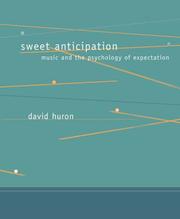
Sweet Anticipation
First published 2006. Subjects: Expectation (Psychology), Music, Psychological aspects of Music, Psychological aspects, Musikpsychologie.
eBay marketplace picks
Marketplace Samples
Example marketplace items related to this page. Use the search link to explore similar finds on eBay.



Endnotes
1.
Source: link.springer.com
Link:https://link.springer.com/article/10.3758/BF03201127
Source snippet
Recognition of music in long-term memory: Are melodic and...by S Hbert 1997 Cited by 219 The notion that the melody (i.e...
2.
Source: pmc.ncbi.nlm.nih.gov
Link:https://pmc.ncbi.nlm.nih.gov/articles/PMC7704448/
Source snippet
by LA Liikkanen 2020 Cited by 65 Repetition is a common element of the experience, resulting in the experience colloquially know...
3.
Source: pmc.ncbi.nlm.nih.gov
Link:https://pmc.ncbi.nlm.nih.gov/articles/PMC10585939/
Source snippet
The song that never ends: The effect of repeated exposure on...by C Killingly 2023 Cited by 9 Previous research demonstrates th...
4.
Source: magazine.hms.harvard.edu
Link:https://magazine.hms.harvard.edu/articles/how-music-resonates-brain
Source snippet
Harvard Medicine MagazineHow Music Resonates in the Brain | Harvard Medicine MagazineMusic also lights up nearly all of the brain inclu...
5.
Source: pmc.ncbi.nlm.nih.gov
Title: PMCWhat makes music memorable?
Link:https://pmc.ncbi.nlm.nih.gov/articles/PMC8121320/
Source snippet
Relationships between...by I Salakka 2021 Cited by 83 Music has a unique capacity to evoke both strong emotions and vivid autobiog...
6.
Source: brainmusic.org
Title: Schmuckler melody1997
Link:https://www.brainmusic.org/MBB91%20Webpage/Schmuckler_melody1997.pdf
Source snippet
Brain MusicExpectancy Effects in Memory for Melodiesby MA SCHMUCKLER 1997 Cited by 70 Research in musical cognition on the factors...
7.
Source: apa.org
Link:https://www.apa.org/pubs/journals/releases/aca-aca0000090.pdf
Source snippet
American Psychological AssociationMelodic Features and Song Popularity Predict Involuntary...by K Jakubowski Cited by 137 Involuntar...
8.
Source: durham-repository.worktribe.com
Link:https://durham-repository.worktribe.com/output/1371466/dissecting-an-earworm-melodic-features-and-song-popularity-predict-involuntary-musical-imagery
Source snippet
Durham RepositoryDissecting an earworm: Melodic features and song popularity...by K Jakubowski 2016 Cited by 137 The present study...
9.
Source: sciencefocus.com
Link:https://www.sciencefocus.com/the-human-body/why-earworms-get-stuck-in-your-head
Source snippet
Why earworms get stuck in your headThe large-scale study, involving 3,000 participants, showed that earworms are usually faster, with a f...
10.
Source: washingtonpost.com
Link:https://www.washingtonpost.com/wellness/interactive/2025/why-songs-get-stuck-in-your-head/
Source snippet
These musical snippets often persist due to their repetitive, simple, and singable nature. Upbeat and easily repeatable songs, especially...
11.
Source: frontiersin.org
Link:https://www.frontiersin.org/journals/psychology/articles/10.3389/fpsyg.2020.02110/full
Source snippet
The Impact of Emotion on Musical Long-Term Memoryby C Nineuil 2020 Cited by 20 Our results showed that the emotional enhancement of...
12.
Source: research.gatech.edu
Title: music can change how you feel about past
Link:https://research.gatech.edu/music-can-change-how-you-feel-about-past
Source snippet
Georgia Tech ResearchMusic Can Change How You Feel About the Past2 Dec 2024 Our results suggest that music acts as an emotional lure, b...
13.
Source: Wikipedia
Link:https://en.wikipedia.org/wiki/Music
Source snippet
MusicMusic is the arrangement of sound to create some combination of form, [harmony]({{ 'harmony/' | relative_url }}), melody, rhythm, or otherwise expressive content.Re...
14.
Source: bu.edu
Link:https://www.bu.edu/synapse/2011/11/27/earworms/
Source snippet
The Song Stuck in Your Head | SynapseNov 27, 2011 An earworm, a term derived from the German ohrwurm, is defined as a cognitive itch...
15.
Source: musicscience.net
Link:https://musicscience.net/research/music-memory/earworms/
Source snippet
Music & ScienceAn earworm is the spontaneous mental recall and repetition of a piece of music, often referred to in everyday terms as hav...
16.
Source: nature.com
Link:https://www.nature.com/articles/s41598-025-92679-1
Source snippet
Music tempo modulates emotional states as revealed...by Z Yang 2025 Cited by 49 This study explores the impact of music tempo on e...
Additional References
17.
Source: researchgate.net
Link:https://www.researchgate.net/publication/227078544_Memory_for_Melodies
Source snippet
(PDF) Memory for MelodiesMemory for music presents a paradox. On the one hand, memory for music that people have already learned can be a...
18.
Source: inspiredbybeatz.com
Link:https://www.inspiredbybeatz.com/en/earworms-why-your-brain-plays-songs-on-repeat/
Source snippet
Earworms: Understand Why Songs Get Stuck In Your HeadResearch from Goldsmiths University of London has revealed that earworms share disti...
19.
Source: musicpsychology.co.uk
Link:https://musicpsychology.co.uk/music-emotion-and-the-brain/
Source snippet
Music, emotion and the brainThe hippocampus is implicated in music-evoked positive emotions that can, in effect, pacify this system, redu...
20.
Source: newyorker.com
Link:https://www.newyorker.com/[culture
Source snippet
While Weiss easily perceives music, it evokes no emotional response, unlike most people for whom music activates the brain's reward syste...
21.
Source: facebook.com
Title: a team of researchers from the uk and germany say that specific features of a tu
Link:https://www.facebook.com/OfficialBPS/posts/a-team-of-researchers-from-the-uk-and-germany-say-that-specific-features-of-a-tu/1330574023640973/
Source snippet
are responsible for some songs becoming earworms...4 Nov 2016 A team of researchers from the UK and Germany say that specific features...
22.
Source: youtube.com
Link:https://www.youtube.com/watch?v=5wh-WdbP-tE
Source snippet
How music, memory, and emotion are connected, with...Elizabeth Margulis, PhD, director of the Music Cognition Lab at Princeton Universit...
23.
Source: unsw.edu.au
Title: ear resistible why there are some songs we simply can t get out
Link:https://www.unsw.edu.au/newsroom/news/2023/04/ear-resistible–why-there-are-some-songs-we-simply-can-t-get-out
Source snippet
Schubert says most reported earworms are the chorus of songs, which are inevitably the pieces of the music repeated the most. Most...Re...
24.
Source: durham.ac.uk
Title: the science of why you can remember song lyrics from years ago
Link:https://www.durham.ac.uk/research/current/thought-leadership/2023/08/the-science-of-why-you-can-remember-song-lyrics-from-years-ago/
Source snippet
The science of why you can remember song lyrics from...15 Aug 2023 Once a melody is familiar, the associated lyrics are generally easi...
25.
Source: durham.ac.uk
Title: why does music bring back memories what the science says
Link:https://www.durham.ac.uk/research/current/thought-leadership/2023/03/why-does-music-bring-back-memories-what-the-science-says/
Source snippet
Why does music bring back memories? What the science...10 Mar 2023 Music brings back memories of events, people and places from our pa...
26.
Source: unsw.edu.au
Title: Why do some songs get stuck in our heads so easily?
Link:https://www.unsw.edu.au/newsroom/news/2025/10/why-do-some-songs-get-stuck-in-our-heads-so-easily-the-science-of-earworms
Source snippet
The...8 Oct 2025 The most earworm-inducing feature is contiguous repetition: a fragment of the music that repeats immediately and wi...
Topic Tree