Within Music
Why One Song Has So Many Rights
One song can involve separate rights in the recording, composition, performance, publishing and licensing uses.

On this page
- Recording rights versus composition rights
- Publishers, labels and collecting societies
- Licensing across uses and territories
Page outline Jump by section
Introduction
One song can be legally many things at once. There is the musical work — the melody, lyrics and composition — and there is the sound recording — the particular performance captured on a master. Each can have different owners, different royalty routes, different collecting societies and different rules depending on whether the music is streamed, broadcast, played in a café, pressed on vinyl, used in a film, performed live or licensed across borders. That is why music rights feel so complicated: the system is not built around the listener’s experience of “one track”, but around a bundle of permissions attached to different uses.
The complexity matters because it decides who gets paid, who must give permission, and why money can be delayed or missed even when music is being used legally. Modern reforms such as the US Music Modernization Act and Europe’s collective-management rules have tried to make licensing more efficient, but they have not removed the basic problem: music is governed by overlapping rights, intermediaries and territories.[U.S]copyright.govmusic modernizationCopyright OfficeThe Music Modernization Act | U.S. Copyright OfficeThe Music Modernization Act (MMA) updates the copyright law to make st…. Copyright Office
One song, two core copyrights
The most important split is between the composition and the recording. The composition is the underlying song: words, melody, harmony and structure. The sound recording is a specific recorded version of that song. A songwriter may own the composition while a record label owns the master recording; a singer may perform on the recording without owning the song; a producer may have royalty rights without controlling the copyright.
This is why a cover version can be lawful even though it does not use the famous recording. A new artist can record the same composition, subject to the correct composition licence, without licensing the original master. But if a film, advert or game wants to use the recognisable original recording, it generally needs both sides cleared: permission for the composition and permission for the master. ASCAP, for example, states that it licenses public performance rights in musical works, not the right to record music or use it in an audiovisual work; master rights must be cleared elsewhere.[ascap.com]ascap.comOpen source on ascap.com.
The confusion grows because everyday language blurs these layers. Fans say “that song” when they mean the released track. Lawyers and royalty systems ask a different question: which copyright is being used, in what way, in which territory, and under which licence?
Recording rights versus composition rights
A useful way to understand music rights is to ask what is being exploited.
If a streaming service plays the released track, it is using the sound recording and the underlying composition. If a radio station broadcasts that track, it may trigger public performance rights in the composition and, depending on the country and platform, rights in the recording. If a theatre company performs the song live, it may use the composition without using any master recording. If a documentary editor places the original track under a scene, the use combines visuals with music and usually requires synchronisation clearance plus a master-use licence.
The composition side is often called publishing, because publishers historically administered songwriters’ rights, licensed uses and collected income. The recording side is often called master rights, because the master is the authorised recording from which copies and licensed uses derive. These two sides may travel through different organisations. In the UK, PRS pays royalties when members’ works are broadcast, performed or played in public, streamed or downloaded, while MCPS handles mechanical royalties when music is reproduced; PPL deals with performers and recording rightsholders when recorded music is played in public or broadcast.[PRS for Music]WikipediaPRS for Music[PPL]ppluk.comOpen source on ppluk.com.
The same split exists in other forms in other countries. In the United States, SoundExchange collects and distributes statutory digital performance royalties for sound recordings, while organisations such as ASCAP, BMI and SESAC deal with public performance of musical works. SoundExchange’s own licensing explanation makes the distinction plainly: digital audio transmission of a musical recording will usually require licensing both the sound recording and the underlying musical work.[SoundExchange]soundexchange.comSource details in endnotes.

Publishers, labels and collecting societies
Music rights are not only complicated because there are multiple copyrights. They are complicated because those copyrights are administered by different people and institutions.
A publisher usually represents songwriters and composers. It registers works, collects publishing income, seeks licences and may pitch songs for use by other artists or in media. A label usually controls or administers recordings. It may fund recording, marketing and distribution, and it often owns or licenses the master rights. A collecting society or collective management organisation sits between music users and rightsholders, issuing licences at scale and distributing royalties back to members.
Collective licensing solves one problem while creating another. It would be impossible for every café, radio station, gym, broadcaster or local venue to negotiate directly with every songwriter and recording owner whose music might be played. Organisations such as PRS for Music and PPL simplify that by offering blanket or repertoire-wide licensing routes. PRS says it represents more than 180,000 members and over 45 million musical works, collecting and paying royalties when music is played in public, broadcast, downloaded, streamed or performed live.[PRS for Music]WikipediaPRS for Music
But collective systems introduce questions about data, fees, distribution rules and bargaining power. The 2024 UK lawsuit brought by songwriters including members of the Jesus and Mary Chain and Robert Fripp against PRS for Music shows how governance disputes can arise inside the royalty system itself. The claim challenged how live performance royalties and administrative costs were handled; PRS denied the allegations and said it would defend its position.[The Guardian]theguardian.comSource details in endnotes.
For creators, this means “register your music” is not a single action. A songwriter, recording artist or independent label may need to register works, recordings, performer shares and publishing information with different bodies. Missing metadata can mean money is collected but not matched to the correct owner.
Why different uses need different licences
The same track can generate different rights depending on how it is used. The categories overlap, but they are not interchangeable.
Public performance covers music being played or performed in public, broadcast or streamed in contexts covered by performance rights. This is why shops, venues and broadcasters may need licences even if they are not selling music directly.
Mechanical rights concern reproduction or distribution of the composition. Historically that meant physical copies such as discs; today it also matters for digital downloads and streams. In the UK, MCPS collects and distributes mechanical royalties for publisher, songwriter and composer members when music is reproduced in formats including streaming, downloads, broadcast and physical products.[Music Publishers Association]mpaonline.org.ukMusic Publishers Association MCPSMusic Publishers Association MCPS
Master-use rights concern the specific recording. If a brand wants the famous version of a track in an advert, the owner of the master recording must be involved.
Synchronisation rights concern pairing music with moving images. A synchronisation licence authorises music to be used with visual images such as film, television, YouTube and video games; in practice, using the original released recording normally also requires master clearance.[Harry Fox Agency]help.harryfox.comSource details in endnotes.
This is why a small production can find music clearance surprisingly hard. It is not enough to ask, “Can we use this song?” The real clearance question is: “Can we use this composition, can we use this recording, for this programme, in these territories, on these platforms, for this length of time?”

Streaming made the old machinery more visible
Streaming did not invent music-rights complexity, but it exposed it at enormous scale. A single stream may involve the recording owner, the performer, the songwriter, the publisher, the platform, a distributor, one or more collecting societies and sometimes a mechanical licensing body. The user hears one play; the back end sees data, splits, licences and territory-specific accounting.
The US Music Modernization Act was designed partly to address this problem for digital music services. It created a new blanket mechanical licensing system for eligible digital uses and established the Mechanical Licensing Collective, which administers mechanical royalties for musical works, not sound recordings. The US Copyright Office stresses that the MLC does not distribute statutory royalties for sound recordings; those are handled separately by SoundExchange.[U.S]copyright.govmusic modernizationCopyright OfficeThe Music Modernization Act | U.S. Copyright OfficeThe Music Modernization Act (MMA) updates the copyright law to make st…. Copyright Office
The MLC’s work also shows why data quality is central. Historical unmatched royalties existed because services had used music but could not reliably match all usage to the correct musical-work owners. The MLC reported in its 2024 annual report that, by June 2025, it had distributed large shares of previously unmatched historical royalties across earlier rate periods, but the need for a historical royalties process itself illustrates the administrative challenge.[Mechanical Licensing Collective]blog.songtrust.comthe mechanical licensing collectivethe mechanical licensing collective
For independent artists, streaming can therefore be both simpler and harder than the old system. Distribution platforms make release easy, but getting paid fully may still require accurate writer splits, publisher registration, recording identifiers, performer registrations and territory-aware royalty collection.
Territories turn one rights problem into many
Music licensing is territorial because copyright law is territorial. A right that is licensed in the UK may not automatically be licensed in the United States, France, Australia or Japan. Rights may be owned by different companies in different places, and collecting societies often rely on reciprocal agreements to collect abroad.
PRS says it has representation agreements with societies in 100 countries so that members can be paid for music use outside the UK. That is useful, but it also shows the structure: international royalty flow depends on networks of societies, mandates, matching systems and local rules.[PRS for Music]WikipediaPRS for Music
The European Union has tried to reduce friction for online music by regulating collective management and multi-territorial licensing. The European Commission’s collective-management framework requires organisations that grant multi-territory licences for online musical works to meet standards intended to improve governance and licensing efficiency.[European Union]europa.euEuropean UnionDirective on collective management of copyrightIn order to be able to grant multi-territory licences covering authors' righ…
Even so, global platforms do not erase territorial rights. A streaming service may operate internationally, but the rights underneath its catalogue still have to be cleared, reported and paid according to contracts, local law and society relationships. That is one reason a song may be available in one country and unavailable in another, or why royalty statements may arrive from multiple sources months apart.
The practical reason rights feel opaque
Music rights feel opaque because each participant sees a different slice of the system. A listener sees a play button. A venue sees a public music licence. A songwriter sees writer shares and publishing statements. A label sees master revenue. A performer may look to PPL or SoundExchange-type routes for certain uses. A film producer sees clearance risk. A platform sees millions of tracks, usage reports and claims.
The result is a system with several recurring failure points:
- Split ownership: co-writers, publishers, labels and performers may all have different shares.
- Incomplete metadata: a recording may not be correctly linked to its underlying composition.
- Different royalty routes: performance, mechanical, master and neighbouring-rights income may arrive through different organisations.
- Use-specific permissions: a licence for public performance is not the same as a sync licence or master-use licence.
- Territorial variation: rights, rates and collection routes change across countries.
- Governance disputes: collecting societies simplify licensing but can be challenged over fees, transparency and distribution rules.
None of this means the system is irrational. It reflects a long history of trying to pay different contributors for different kinds of value: writing a song, performing it, financing a recording, distributing it, broadcasting it, streaming it or placing it in a film. The difficulty is that all those values are bundled into what the public experiences as one piece of music.
Why the complexity is unlikely to disappear
There is strong pressure to simplify music rights, especially for digital services, independent creators and small businesses. Blanket licences, collective management, databases and statutory schemes all exist because direct negotiation for every use would be unworkable. TheMusicLicence in the UK, for example, was created so businesses could obtain one combined route for public use of music from PPL and PRS rather than dealing with separate licences for recording and composition rights.[PPL PRS]pplprs.co.ukSource details in endnotes.
But simplification has limits. A single licence can make access easier for users, yet it cannot make all rightsholders identical. Songwriters, publishers, labels, featured artists, session musicians, producers and platforms have different legal interests and different bargaining power. A single global database would still need accurate song splits, recording identifiers, local-law compatibility and governance rules that rightsholders trust.
The most realistic future is therefore not a world where music has only one right, but one where the machinery becomes less leaky: better metadata, clearer creator registration, more transparent society rules, simpler blanket licensing for common uses and stronger tools for matching recordings to compositions. The core structure will remain complicated because music itself is not just one asset. It is a composition, a recording, a performance, a business relationship and a licensed use — all at once.
Amazon book picks
Further Reading
Books and field guides related to Why One Song Has So Many Rights. Use these as the next step if you want deeper reading beyond the article.
Music Business Handbook and Career Guide
Explains the relationships among labels, publishers and collecting societies.
All You Need to Know About the Music Business
Comprehensively explains recording rights, publishing, royalties and licensing.
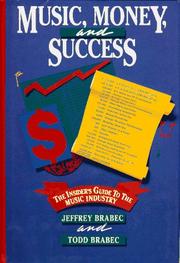
Music, money, and success
Excellent coverage of rights categories and revenue streams.
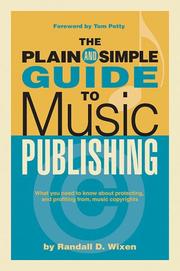
The plain and simple guide to music publishing
Clarifies ownership and licensing of compositions.
eBay marketplace picks
Marketplace Samples
Example marketplace items related to this page. Use the search link to explore similar finds on eBay.


Endnotes
1.
Source: copyright.gov
Title: music modernization
Link:https://www.copyright.gov/music-modernization/
Source snippet
Copyright OfficeThe Music Modernization Act | U.S. Copyright OfficeThe Music Modernization Act (MMA) updates the copyright law to make st...
2.
Source: ascap.com
Link:https://www.ascap.com/help/ascap-licensing
3.
Source: ppluk.com
Link:https://www.ppluk.com/royalties/uk-royalties/performers/
4.
Source: ppluk.com
Link:https://www.ppluk.com/licensing/
5.
Source: soundexchange.com
Link:https://www.soundexchange.com/frequently-asked-questions/
6.
Source: soundexchange.com
Title: Sound Exchange Licensing 101
Link:https://www.soundexchange.com/service-provider/licensing-101/
7.
Source: pplprs.co.uk
Link:https://pplprs.co.uk/themusiclicence/
8.
Source: soundexchange.com
Link:https://www.soundexchange.com/
9.
Source: soundexchange.com
Link:https://www.soundexchange.com/what-we-do/for-digital-service-providers/
10.
Source: ascap.com
Link:https://www.ascap.com/help
11.
Source: ascap.com
Link:https://www.ascap.com/help/music-business-101/youtube-faq-uploaders
12.
Source: ascap.com
Link:https://www.ascap.com/music-users/types/website-mobile-app-condensed-faqs
13.
Source: ascap.com
Link:https://www.ascap.com/~/media/files/pdf/licensing/brochures/musiccopyright101.pdf
14.
Source: copyright.gov
Link:https://www.copyright.gov/music-modernization/faq.html
15.
Source: copyright.gov
Title: ML C-Ex-Parte-Meeting
Link:https://www.copyright.gov/rulemaking/mma-designations/2024/MLC-Ex-Parte-Meeting-Summary-2025-11-20.pdf
16.
Source: youtube.com
Title: Breaking Down the MMA: Part 1
Link:https://www.youtube.com/watch?v=oGgan_kzNwU
17.
Source: youtube.com
Link:https://www.youtube.com/watch?v=Mwx9m6-z0fE
18.
Source: youtube.com
Link:https://www.youtube.com/watch?v=rnUtUq25ECI
19.
Source: youtube.com
Title: Everything You Need to Know About Music Licensing
Link:https://www.youtube.com/watch?v=F3G955sY_lQ
Source snippet
Music Royalties 101: Understanding Master vs. Publishing...
20.
Source: youtube.com
Title: Music Royalties 101: Understanding Master vs. Publishing
Link:https://www.youtube.com/watch?v=kYJ7x-w7Y8k
Source snippet
How Music Copyright Actually Works...
21.
Source: youtube.com
Title: How Music Copyright Actually Works
Link:https://www.youtube.com/watch?v=YI5KsYv3aUk
Source snippet
Why Music Rights Are So Complicated...
22.
Source: youtube.com
Title: Why Music Rights Are So Complicated
Link:https://www.youtube.com/watch?v=eZbgOuw4HdU
Source snippet
Understanding Music Publishing and Master Rights...
23.
Source: youtube.com
Title: Understanding Music Publishing and Master Rights
Link:https://www.youtube.com/watch?v=p499j1Jb-Jk
24.
Source: europa.eu
Link:https://europa.eu/rapid/press-release_MEMO-14-79_en.htm
Source snippet
European UnionDirective on collective management of copyrightIn order to be able to grant multi-territory licences covering authors' righ...
25.
Source: prsformusic.com
Link:https://www.prsformusic.com/what-we-do/prs-and-mcps
Source snippet
PRS for MusicPRS and MCPS: Who does what?PRS pay royalties to our members when their works are: broadcast on TV or radio; performed or pl...
26.
Source: prsformusic.com
Link:https://www.prsformusic.com/what-we-do
27.
Source: theguardian.com
Link:https://www.theguardian.com/music/article/2024/jun/25/jesus-and-mary-chain-robert-fripp-and-more-sue-prs-for-music-over-concert-royalties
28.
Source: mpaonline.org.uk
Title: Music Publishers Association MCPS
Link:https://mpaonline.org.uk/about/mcps/
29.
Source: help.harryfox.com
Link:https://help.harryfox.com/what-is-a-synchronization-license
30.
Source: themlc.com
Title: The MLC 2024 Annual Report
Link:https://www.themlc.com/hubfs/The%20MLC%202024%20Annual%20Report.pdf
31.
Source: themlc.com
Link:https://www.themlc.com/historical-royalties
32.
Source: prsformusic.com
Link:https://www.prsformusic.com/
33.
Source: library.mi.edu
Link:https://library.mi.edu/musiccopyright/licensing
34.
Source: theguardian.com
Link:https://www.theguardian.com/politics/live/2026/jun/03/henry-nowak-southampton-riot-labour-keir-starmer-police-uk-politics-latest-news
35.
Source: theguardian.com
Link:https://www.theguardian.com/business/2026/jun/03/trump-threatens-tariffs-60-countries-forced-labour
36.
Source: soundcharts.com
Title: mechanical royalties
Link:https://soundcharts.com/en/blog/mechanical-royalties
37.
Source: prsformusic.com
Title: how to understanding publishing rights
Link:https://www.prsformusic.com/m-magazine/how-to/how-to-understanding-publishing-rights
38.
Source: prsformusic.com
Link:https://www.prsformusic.com/royalties
39.
Source: prsformusic.com
Link:https://www.prsformusic.com/what-we-do/who-we-work-with/ppl
40.
Source: orphiq.com
Title: soundexchange digital royalties
Link:https://orphiq.com/resources/soundexchange-digital-royalties
41.
Source: Wikipedia
Title: PRS for Music
Link:https://en.wikipedia.org/wiki/PRS_for_Music
42.
Source: ebsco.com
Link:https://www.ebsco.com/research-starters/music/music-modernization-act
43.
Source: hallboothsmith.com
Title: music modernization act
Link:https://hallboothsmith.com/music-modernization-act/
44.
Source: blog.songtrust.com
Title: the mechanical licensing collective
Link:https://blog.songtrust.com/the-mechanical-licensing-collective
Additional References
45.
Source: umusicpub.com
Link:https://www.umusicpub.com/nl/How-To-License-Music.aspx
Source snippet
Universal Music PublishingLicensing Music- The second set of rights you need to clear are the Master Rights which are for the actual soun...
46.
Source: uspto.gov
Link:https://www.uspto.gov/sites/default/files/documents/SoundExchange_Comments.pdf
47.
Source: blogs.loc.gov
Link:https://blogs.loc.gov/copyright/2020/04/the-breakdown-what-songwriters-need-to-know-about-the-music-modernization-act-and-royalty-payments/
48.
Source: foximusic.com
Link:https://www.foximusic.com/7-types-of-music-licenses/
49.
Source: facebook.com
Link:https://www.facebook.com/TeacherMpamire/posts/according-to-copy-right-laws-neighbouring-rights-or-related-rights-are-not-about/1463868558425378/
50.
Source: classicalmusicrising.org
Link:https://classicalmusicrising.org/wp-content/uploads/Music-Rights-Weisbroth_Digital_Music_Licensing_Guide.pdf
51.
Source: soundtrack.io
Link:https://www.soundtrack.io/blog/paying-ascap-and-bmi/
52.
Source: exploration.io
Link:https://exploration.io/how-does-the-music-modernization-act-work/
53.
Source: ipoi.gov.ie
Link:https://www.ipoi.gov.ie/en/types-of-ip/copyright1/copyright-licensing-bodies/collective-management-of-copyright-related-rights/
54.
Source: itsright.it
Link:https://www.itsright.it/en/producers/
Topic Tree