Within Music
Why Rhythm Makes Music Feel Physical
Rhythm turns sound into anticipation, movement and shared physical energy across dances, chants, pop hooks and live crowds.

On this page
- Beat, pulse and repetition
- Dance floors and collective timing
- Why rhythm changes meaning by context
Page outline Jump by section
Introduction
Rhythm makes music feel physical because it gives the body something to predict, join and share. A beat is not just a sound repeated in time; it is a moving invitation. Listeners tap a foot before deciding to, dancers lock steps to a pulse, crowds clap together, and performers use repetition and surprise to build energy. The mechanism is partly neurological, because rhythm engages auditory and motor systems together, and partly social, because moving in time with other people can create closeness, excitement and a sense of common purpose. Research on beat perception, groove, dance synchrony, live concerts and rhythmic auditory stimulation all points to the same core idea: rhythm turns listening into timed bodily attention. It does not move every body in the same way, or mean the same thing in every setting, but it is one of music’s strongest routes from sound to action.[PubMed]pubmed.ncbi.nlm.nih.govWe predicted that the basal ganglia and supplementary motor area (SMA) would…Read more…[Nature]nature.comIndividual differences in rhythm perception modulate music…by M Martins · 2023 · Cited by 16 — These findings suggest that audit…
Beat, Pulse and Repetition
A rhythm becomes bodily when the listener can feel a pulse beneath the surface pattern. That pulse may be explicit, as in a kick drum on every main beat, or implied, as in a groove where the strongest sense of timing comes from the relation between bass, drums, handclaps and vocal phrasing. The important point is that the brain is not merely counting sounds after they happen. It is predicting when the next important moment will arrive.
Neuroscience studies help explain why this feels so immediate. Research on beat perception has found activity in motor-related brain regions, including the basal ganglia and supplementary motor area, even when people are only listening rather than moving. This matters because it suggests that hearing a beat and preparing movement are closely linked processes, not separate activities joined only after conscious decision.[PubMed]pubmed.ncbi.nlm.nih.govWe predicted that the basal ganglia and supplementary motor area (SMA) would…Read more…
Repetition is the practical foundation. A repeated pulse lets the body settle into timing: walking, nodding, swaying, clapping or dancing can all align with it. Too little repetition and the listener has nothing stable to join; too much unvaried repetition and the rhythm can become flat. Much dance music works by balancing stability with change: the pulse holds the floor steady while fills, syncopations, drops, breaks and accents keep attention alive.
This is why the beat is often felt before it is analysed. A listener does not need to name the metre or count bars to know when to clap. The body can track regularity at the level of expectation: this is where the next step, nod, breath or gesture belongs. In everyday language, people call this “feeling the beat”, but the phrase points to a genuine mechanism: the sound organises time in a way the body can use.
Groove Is Prediction With Just Enough Trouble
Some rhythms make people want to move more than others. The word often used for this is “groove”: the pleasurable urge to move with music. Groove is not simply the same as speed, loudness or a perfectly regular beat. A metronome is highly regular, but it does not usually make a room dance. What makes groove powerful is the mix of predictability and tension.
A key study on funk drum patterns found that medium levels of syncopation produced the strongest ratings for both pleasure and wanting to move. Syncopation means that accents fall in places that play against the expected beat. Too little syncopation can feel obvious; too much can make the beat hard to locate. The sweet spot is a rhythm that lets the listener predict the pulse while still being teased by off-beat accents and delayed emphasis.[PLOS]journals.plos.orgOpen source on plos.org.
This helps explain why a great groove often feels as if it is leaning forward. The body senses where the beat should land, while the music places some events slightly around that expectation. The pleasure comes from being able to recover the pulse, not from being lost. In funk, disco, house, hip-hop, Afrobeats, salsa, drum and bass, rock and pop, that tension can be created in different ways: ghost notes on drums, basslines that anticipate the downbeat, claps that mark a backbeat, or vocals that stretch phrases across the bar.
The same principle also explains why “danceable” does not always mean simple. A rhythm can be complex and still easy to move to if its complexity is organised around a felt pulse. Conversely, a technically regular rhythm can feel stiff if it lacks weight, swing, emphasis or interaction. The body is not just asking whether events are evenly spaced; it is asking whether the pattern offers a meaningful way to move.
Dance Floors and Collective Timing
Rhythm becomes socially powerful when people move together. On a dance floor, at a concert, in a chant, in a procession or in a fitness class, the beat gives separate bodies a shared clock. That shared clock reduces the need for negotiation. People can enter, copy, adjust, anticipate and belong without speaking.
Studies of dance synchrony show why this matters. Research on synchronised dancing has found links between moving together, raised pain thresholds and increased social closeness, with pain threshold often used as an indirect marker associated with endorphin activity. Another study found that synchrony and physical exertion independently increased bonding measures, suggesting that rhythmic group movement can combine bodily effort with social alignment.[PMC]pmc.ncbi.nlm.nih.govSource details in endnotes.[Royal Society Publishing]royalsocietypublishing.orgSynchrony and exertion during dance independentlySynchrony and exertion during dance independently
Live music adds another layer because the audience is not only hearing the same rhythm but physically sharing space. A 2023 study of live concerts found evidence of physiological synchrony among audience members, including heart rate, respiration, skin conductance and movement synchrony. This does not mean every person feels exactly the same thing, but it does show that a crowd can become bodily coordinated during shared musical experience.[PMC]pmc.ncbi.nlm.nih.govSource details in endnotes.
That coordination helps explain familiar concert behaviours: clapping in time, jumping on a drop, chanting a hook, waving arms together, or surging towards a chorus. The rhythm does not force these actions in a mechanical sense. It creates a timing structure in which they become easy, contagious and meaningful. The result is often more than individual enjoyment multiplied by a crowd; it is a shared physical event.

Why Rhythm Can Help Bodies Move Better
The link between rhythm and movement is not only cultural or emotional. It also has clinical uses. Rhythmic auditory stimulation, often shortened to RAS, uses regular sound cues to support movement, especially gait. In rehabilitation contexts, a beat can act as an external timing guide for walking, stepping and coordination.
Reviews of rhythm- and music-based interventions report that rhythmic cueing has been studied in conditions including Parkinson’s disease, stroke and other neurological movement difficulties. The evidence is not a claim that rhythm is a cure; rather, it suggests that auditory timing can help organise motor output in measurable ways such as stride length, cadence, walking speed and balance in some populations.[PMC]pmc.ncbi.nlm.nih.govSource details in endnotes.[Frontiers]frontiersin.orgFrontiersMusic and social bonding: “self-other” merging and…by B Tarr · 2014 · Cited by 820 — In this paper we review evidence support…
The mechanism is closely related to ordinary musical movement. When a steady beat helps someone tap, walk or dance in time, it is providing predictable temporal information. In rehabilitation, that predictability can be used deliberately: the cue gives the person a target moment for the next step. The beat externalises timing, making movement less dependent on impaired internal control.
This clinical evidence is useful for understanding music more broadly because it shows that rhythm is not merely decorative. It can structure action. A drum pattern in a club, a chant in a stadium and a metronomic cue in therapy are very different cultural events, but each uses repeated timing to guide bodies through time.
Chants, Hooks and the Body’s Memory
Rhythm also moves bodies by making music memorable. A repeated hook or chant gives listeners a pattern they can join quickly. The words may matter, but the timing often matters first: where the syllables fall, where breath lands, when the group response comes, how long the pause lasts before the next shout.
This is why rhythm sits at the centre of many collective musical forms. Call-and-response, protest chants, football songs, playground clapping games, work songs and festival choruses all rely on repeatable timing. The structure lets people participate with little rehearsal. Once the pulse is understood, the group can keep going, grow louder, accelerate, stop together or restart.
Rhythm’s role in memory is also practical for pop. A hook often succeeds because it is not only singable but bodily graspable: a listener can feel the entrance, anticipate the repetition and recognise the shape after only a few hearings. The most effective rhythmic hooks are rarely isolated from melody, harmony or timbre, but they often supply the part that lets the song become an action: clapping, pointing, stepping, bouncing, chanting or miming the words.
The MIT Press Reader’s discussion of rhythm notes that repeated sounds and silences support dancing, memory and group singing, and points to examples such as religious chants and military cadence calls. That range is important: rhythm does not belong only to entertainment. It is a tool for coordination, recall and shared attention across many kinds of musical life.[The MIT Press Reader]thereader.mitpress.mit.eduThe MIT Press Reader The Extraordinary Ways Rhythm Shapes Our LivesThe MIT Press Reader The Extraordinary Ways Rhythm Shapes Our Lives

Why Rhythm Changes Meaning by Context
The same rhythmic mechanism can carry very different meanings depending on setting. A hard, regular pulse can feel euphoric in a club, disciplined in a march, threatening in a film score, comic in a parody, sacred in a ritual, or comforting in a lullaby if softened and slowed. Rhythm moves bodies, but culture tells people what kind of movement is appropriate, desirable or forbidden.
Tempo is one obvious factor. Fast rhythms can raise arousal, but speed alone does not decide meaning. A rapid drum pattern might invite dance in one context and anxiety in another. Slow repetition might calm a child, solemnise a ceremony or build suspense. Timbre, volume, venue, lyrics, social setting and expectation all change how the body interprets the pulse.
This is why rhythm should not be reduced to a universal button that simply “makes people dance”. It offers affordances: possibilities for action. A dance floor encourages visible movement; a concert hall may invite stillness, breath synchrony or small seated movements; a religious or commemorative setting may turn repetition into focus and restraint. The listener’s body still responds, but the response is shaped by learned codes.
Ethnomusicological work on entrainment makes this wider point: rhythmic coordination through music is easy to recognise in examples such as foot tapping, but musical entrainment must be understood within broader biological and social functioning, not treated as a single behaviour with one meaning everywhere.[musicdynamicslab.uconn.edu]musicdynamicslab.uconn.eduSource details in endnotes.
What Rhythm Reveals About Music
Rhythm shows that music is not only heard in the ears. It is tracked by attention, anticipated by the brain, rehearsed by the motor system and tested in the body. The beat makes time usable. Repetition gives listeners a stable path. Syncopation creates tension against that path. Groove turns that tension into pleasure. Dance and concert settings turn private timing into shared energy.
The most memorable point is that rhythm does not merely accompany movement; it organises the possibility of movement. It can make a lone listener nod, a crowd jump, a group chant, a dancer improvise, a patient step more steadily or a room feel briefly united. That is why rhythm is one of music’s most direct mechanisms: it converts sound into anticipation, and anticipation into bodily action.
Amazon book picks
Further Reading
Books and field guides related to Why Rhythm Makes Music Feel Physical. Use these as the next step if you want deeper reading beyond the article.
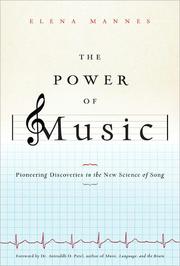
This Is Your Brain On Music
Explains how rhythm engages perception, emotion and movement.
eBay marketplace picks
Marketplace Samples
Example marketplace items related to this page. Use the search link to explore similar finds on eBay.

Endnotes
1.
Source: nature.com
Link:https://www.nature.com/articles/s41598-023-48132-2
Source snippet
Individual differences in rhythm perception modulate music...by M Martins · 2023 · Cited by 16 — These findings suggest that audit...
2.
Source: journals.plos.org
Link:https://journals.plos.org/plosone/article?id=10.1371%2Fjournal.pone.0094446
3.
Source: pmc.ncbi.nlm.nih.gov
Link:https://pmc.ncbi.nlm.nih.gov/articles/PMC3989225/
4.
Source: pmc.ncbi.nlm.nih.gov
Link:https://pmc.ncbi.nlm.nih.gov/articles/PMC4985033/
5.
Source: pmc.ncbi.nlm.nih.gov
Link:https://pmc.ncbi.nlm.nih.gov/articles/PMC10556000/
6.
Source: pmc.ncbi.nlm.nih.gov
Link:https://pmc.ncbi.nlm.nih.gov/articles/PMC8801707/
7.
Source: thereader.mitpress.mit.edu
Title: The MIT Press Reader The Extraordinary Ways Rhythm Shapes Our Lives
Link:https://thereader.mitpress.mit.edu/the-extraordinary-ways-rhythm-shapes-our-lives/
8.
Source: musicdynamicslab.uconn.edu
Link:https://musicdynamicslab.uconn.edu/wp-content/uploads/sites/433/2016/03/large2004ahedits.pdf
9.
Source: nature.com
Link:https://www.nature.com/articles/s41598-025-93948-9
10.
Source: nature.com
Link:https://www.nature.com/articles/s41598-022-11324-3
11.
Source: nature.com
Link:https://www.nature.com/articles/s41598-025-05952-8
12.
Source: journals.plos.org
Link:https://journals.plos.org/plosone/article/file?id=10.1371%2Fjournal.pone.0139409&type=printable
13.
Source: jps.ecnu.edu.cn
Title: j.cnki.1671 6981.20250112
Link:https://jps.ecnu.edu.cn/EN/10.16719/j.cnki.1671-6981.20250112
14.
Source: pubmed.ncbi.nlm.nih.gov
Link:https://pubmed.ncbi.nlm.nih.gov/17488212/
Source snippet
We predicted that the basal ganglia and supplementary motor area (SMA) would...Read more...
15.
Source: frontiersin.org
Link:https://www.frontiersin.org/journals/psychology/articles/10.3389/fpsyg.2014.01096/full
Source snippet
FrontiersMusic and social bonding: “self-other” merging and...by B Tarr · 2014 · Cited by 820 — In this paper we review evidence support...
16.
Source: royalsocietypublishing.org
Title: Synchrony and exertion during dance independently
Link:https://royalsocietypublishing.org/rsbl/article/11/10/20150767/87929/Synchrony-and-exertion-during-dance-independently
17.
Source: pubmed.ncbi.nlm.nih.gov
Link:https://pubmed.ncbi.nlm.nih.gov/26510676/
18.
Source: frontiersin.org
Link:https://www.frontiersin.org/journals/neurology/articles/10.3389/fneur.2022.940419/full
19.
Source: pubmed.ncbi.nlm.nih.gov
Link:https://pubmed.ncbi.nlm.nih.gov/24740381/
20.
Source: frontiersin.org
Link:https://www.frontiersin.org/journals/psychology/articles/10.3389/fpsyg.2014.01185/full
21.
Source: frontiersin.org
Link:https://www.frontiersin.org/journals/human-neuroscience/articles/10.3389/fnhum.2020.578546/pdf
22.
Source: frontiersin.org
Link:https://www.frontiersin.org/journals/psychology/articles/10.3389/fpsyg.2017.01034/full
23.
Source: frontiersin.org
Link:https://www.frontiersin.org/journals/psychology/articles/10.3389/fpsyg.2014.01111/full
24.
Source: pianowithjonny.com
Title: Rhythm Changes
Link:https://pianowithjonny.com/piano-lessons/rhythm-changes-a-complete-guide/
25.
Source: Wikipedia
Title: Rhythm changes
Link:https://en.wikipedia.org/wiki/Rhythm_changes
26.
Source: Wikipedia
Link:https://en.wikipedia.org/wiki/Rhythm
27.
Source: britannica.com
Link:https://www.britannica.com/art/rhythm-music
Additional References
28.
Source: academia.edu
Link:https://www.academia.edu/121250267/The_Psychology_of_Music_Rhythm_and_Movement
29.
Source: researchgate.net
Link:https://www.researchgate.net/publication/295864264_Silent_Disco_Dancing_in_synchrony_leads_to_elevated_pain_thresholds_and_social_closeness
30.
Source: researchgate.net
Link:https://www.researchgate.net/publication/359819932_Audience_Interbrain_Synchrony_During_Live_Music_Is_Shaped_by_Both_the_Number_of_People_Sharing_Pleasure_and_the_Strength_of_This_Pleasure
31.
Source: neuroscience.gsu.edu
Link:https://neuroscience.gsu.edu/files/2025/10/An-integrated-review-of-music-cognition-and-rhythmic-stimuli-in-sensorimotor-neurocognition-and-neurorehabilitation.pdf
32.
Source: musicandmeaning.net
Link:https://www.musicandmeaning.net/issues/showArticle.php?artID=8.3
33.
Source: physio-pedia.com
Link:https://www.physio-pedia.com/Auditory_Rhythmic_Stimulation_for_Gait_Training
34.
Source: researchgate.net
Link:https://www.researchgate.net/figure/Group-synchrony-of-movement-over-time-during-a-music-set-at-a-dance-club-Movement-data_fig4_309335496
35.
Source: researchgate.net
Link:https://www.researchgate.net/publication/42789808_In_Time_With_the_Music_The_Concept_of_Entrainment_and_Its_Significance_for_Ethnomusicology
36.
Source: mutor-2.github.io
Link:https://mutor-2.github.io/ScienceOfMusic/units/12/
37.
Source: lermagazine.com
Link:https://lermagazine.com/article/music-therapy-and-gait-rehab-to-a-different-beat
Topic Tree