Within Rhythm
How Dance Floors Turn Beats Into Belonging
A strong beat gives crowds a shared clock, making clapping, stepping, chanting and jumping easier to coordinate without words.
On this page
- The beat as a shared clock
- Synchrony, effort and social bonding
- Why crowds move together at concerts
Page outline Jump by section
Introduction
A dance floor does more than gather people in one place. It gives them access to the same pulse. When a strong beat is easy to hear and predict, hundreds or even thousands of people can align claps, steps, jumps and gestures without speaking to one another. In effect, rhythm becomes a shared clock. This is one reason music feels especially powerful in crowds: the beat does not merely organise individual movement, it organises collective movement. Research on synchrony, dance and audience behaviour suggests that moving together in time can increase feelings of connection, cooperation and belonging, helping explain why crowded dance floors often feel more unified than the same people standing still.[PMC]pmc.ncbi.nlm.nih.govCollective music listening: Movement energy is enhanced by…by D Dotov · 2021 · Cited by 84 — The regularity of musical beat makes i…
The Beat as a Shared Clock
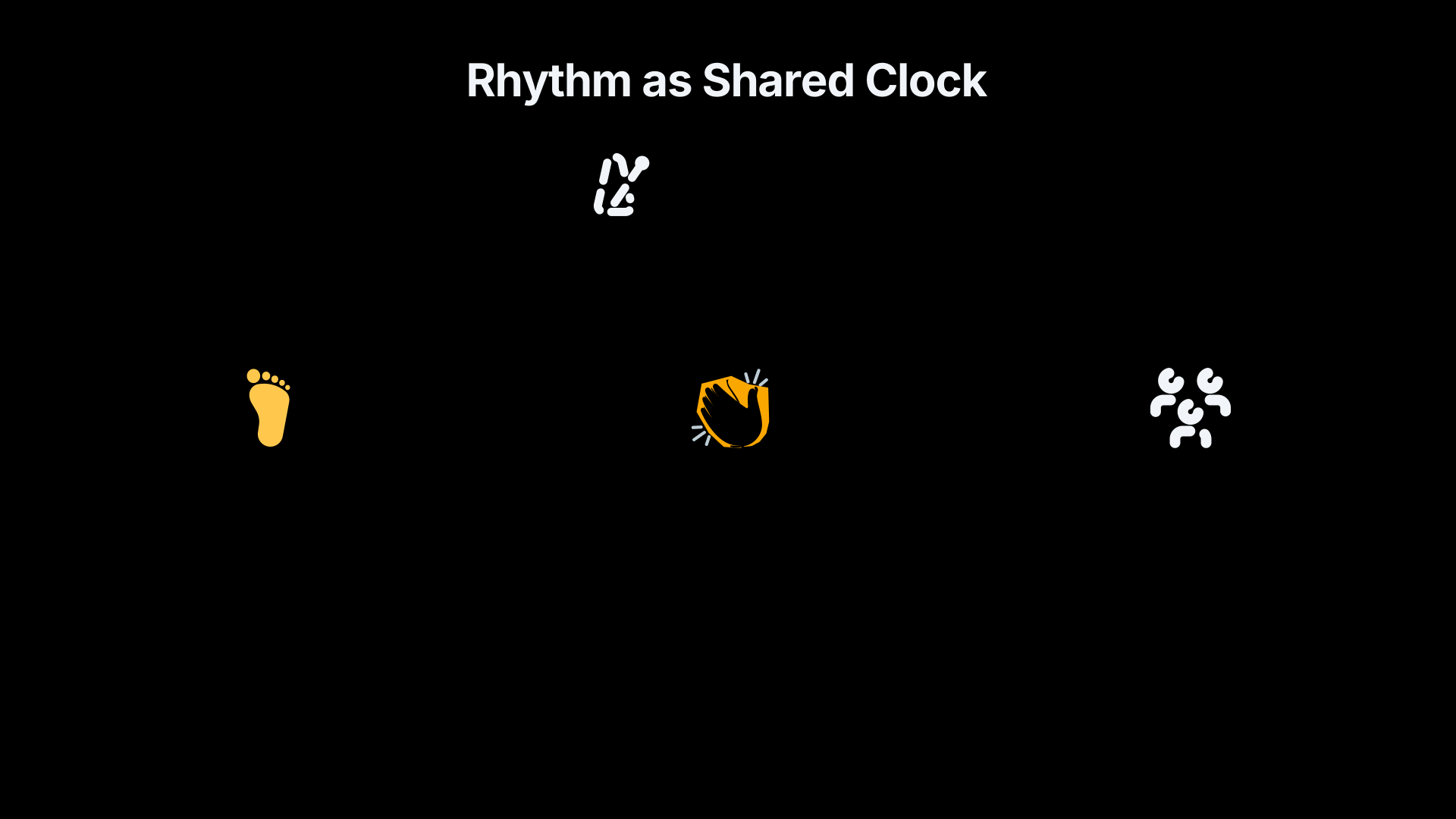
One of rhythm’s most important social functions is that it provides a common timing reference. Unlike spoken instructions, a musical pulse is continuously available to everyone in the space at once. Each listener can predict when the next beat will arrive and adjust their movements accordingly.
This process is often described as entrainment: the tendency of bodily actions to align with an external rhythm. People naturally match bouncing, clapping and stepping to a musical beat, especially when the pulse is clear and regular. Studies of musical movement show that most participants can synchronise actions such as clapping and bouncing with remarkable accuracy when a salient beat is present.[PLOS]journals.plos.orgA Large Sample Study of Bouncing and Clapping to Musicby P Tranchant · 2016 · Cited by 91 — Here, we evaluate naturalistic synchroniz…
The result is a practical solution to a coordination problem. A crowd does not need to negotiate timing verbally. The music supplies it. Whether the setting is a nightclub, festival, football terrace or concert arena, the beat allows large numbers of strangers to act as though they are following the same instruction.
A useful comparison comes from research on rhythmic applause. Audiences sometimes shift from scattered clapping into a unified pattern because individuals gradually adjust their timing to those around them. What begins as noise can become coordinated rhythm once enough people lock onto a common pulse.[APS Link]link.aps.orgLink Physics of the rhythmic applause | PhysRev. E - APS Journalsby Z Néda · 2000 · Cited by 406 — We report on a series of measurements aimed to characterize the development and th…
Synchrony, Effort and Social Bonding
Shared timing matters because humans are highly sensitive to synchrony. When people move together, they often perceive one another as more connected, cooperative and socially bonded.
Experimental studies have repeatedly found that synchronised movement increases feelings of affiliation and closeness. Research involving group dance has shown that synchrony and physical exertion each contribute to stronger social bonding. Participants who moved together in time reported greater feelings of connection than those who did not.[PubMed]pubmed.ncbi.nlm.nih.govIt is hypothesized to play a role in social bonding…
Music makes this process easier because it provides a stable rhythmic framework. Rather than trying to coordinate directly with every individual around them, dancers coordinate with the beat, and through the beat they become coordinated with each other. Researchers reviewing music and social bonding have argued that this combination of rhythmic synchrony and shared physical activity helps create unusually strong social effects.[PMC]pmc.ncbi.nlm.nih.govCollective music listening: Movement energy is enhanced by…by D Dotov · 2021 · Cited by 84 — The regularity of musical beat makes i…
The consequences extend beyond simple enjoyment:
- People often report greater trust and affiliation after moving in synchrony.
- Coordinated movement can increase cooperation within groups.
- Synchronous activity may reduce perceived social distance between participants.
- Shared movement can create a stronger sense of collective identity. Frontiers[PMC]pmc.ncbi.nlm.nih.govCollective music listening: Movement energy is enhanced by…by D Dotov · 2021 · Cited by 84 — The regularity of musical beat makes i…[PMC]pmc.ncbi.nlm.nih.govCollective music listening: Movement energy is enhanced by…by D Dotov · 2021 · Cited by 84 — The regularity of musical beat makes i…
These findings help explain why dancing together can feel socially meaningful even when participants never exchange names or conversations.
Why Crowds Move Together at Concerts
Concerts provide a particularly clear example of shared timing because thousands of individuals receive the same rhythmic signals simultaneously.
When a crowd claps on the backbeat, jumps during a chorus or sways during a slower section, the behaviour often spreads rapidly. The beat acts as a focal point that reduces uncertainty about when movement should occur. Once a critical number of people move together, visual cues from surrounding bodies reinforce the pattern, making synchrony even easier to maintain.[PMC]pmc.ncbi.nlm.nih.govCollective music listening: Movement energy is enhanced by…by D Dotov · 2021 · Cited by 84 — The regularity of musical beat makes i…
Researchers studying collective music experiences have found that musical beats encourage movement synchrony and that synchrony is associated with greater interpersonal trust and affiliation. Audience studies also show that people can become synchronised physiologically and behaviourally during live performances, suggesting that shared musical experiences operate at multiple levels simultaneously.[PMC]pmc.ncbi.nlm.nih.govCollective music listening: Movement energy is enhanced by…by D Dotov · 2021 · Cited by 84 — The regularity of musical beat makes i… Nature The feeling many concertgoers describe as being[nature.com]nature.comPhysiological audience synchrony in classical concerts…by W Tschacher · 2024 · Cited by 20 — We hypothesized that the music would indu…“part of the crowd” emerges from this process. Individuals remain distinct, but their actions become temporally aligned. The experience is less about copying identical movements than about sharing the same pulse.
From Coordination to Belonging
Historical and anthropological studies of music and dance often point out that collective rhythmic activity appears across cultures and eras. Military marches, communal dances, religious ceremonies, celebrations and festivals all use shared timing to coordinate groups. The details differ, but the underlying principle is similar: rhythm allows many people to act together in time.[OUP Academic]academic.oup.comOUP Academic16 Social Bonding Through Dance and 'Musiking'This “social bonding hypothesis” of dance is described in the context of large…
Modern dance floors continue this pattern. A strong beat transforms individual listeners into participants in a collective event. The music provides a common temporal structure, synchrony emerges from that structure, and synchrony can strengthen perceptions of connection. Research even suggests that observers judge groups moving in perfect time as more socially bonded and cohesive than groups whose movements are misaligned.[ScienceDirect]sciencedirect.comSignals through music and dance: Perceived social bonds…by H Lee · 2020 · Cited by 46 — Completely synchronised movement…
This is why rhythm’s influence extends beyond movement itself. On a crowded dance floor, the beat is not simply something people hear. It becomes a shared reference point that allows strangers to coordinate behaviour, experience collective energy and briefly feel part of something larger than themselves.[PMC]pmc.ncbi.nlm.nih.govCollective music listening: Movement energy is enhanced by…by D Dotov · 2021 · Cited by 84 — The regularity of musical beat makes i…[2dg.dk]dg.dkNew study from MIB: We feel connected when we move…30 Jun 2020 — The results show that synchronous movements increase social closeness…
Amazon book picks
Further Reading
Books and field guides related to How Dance Floors Turn Beats Into Belonging. Use these as the next step if you want deeper reading beyond the article.
This Is Your Brain On Music
Explains rhythm, movement, social response and musical perception.
How Music Works
Discusses live performance, audiences and collective musical experiences.
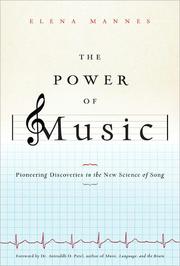
The Power of Music
First published 2011. Subjects: Music, Music and science, Psychological aspects, Music, psychological aspects.
eBay marketplace picks
Marketplace Samples
Example marketplace items related to this page. Use the search link to explore similar finds on eBay.


Endnotes
1.
Source: pmc.ncbi.nlm.nih.gov
Link:https://pmc.ncbi.nlm.nih.gov/articles/PMC8107509/
Source snippet
Collective music listening: Movement energy is enhanced by...by D Dotov · 2021 · Cited by 84 — The regularity of musical beat makes i...
2.
Source: journals.plos.org
Link:https://journals.plos.org/plosone/article?id=10.1371%2Fjournal.pone.0160178
Source snippet
A Large Sample Study of Bouncing and Clapping to Musicby P Tranchant · 2016 · Cited by 91 — Here, we evaluate naturalistic synchroniz...
3.
Source: link.aps.org
Title: Link Physics of the rhythmic applause | Phys
Link:https://link.aps.org/doi/10.1103/PhysRevE.61.6987
Source snippet
Rev. E - APS Journalsby Z Néda · 2000 · Cited by 406 — We report on a series of measurements aimed to characterize the development and th...
4.
Source: pmc.ncbi.nlm.nih.gov
Title: PMCMusic and social bonding: “self-other” merging
Link:https://pmc.ncbi.nlm.nih.gov/articles/PMC4179700/
Source snippet
NIHby B Tarr · 2014 · Cited by 812 — In this paper we review evidence supporting two thus far independently investigated mechanisms...
5.
Source: academic.oup.com
Link:https://academic.oup.com/book/2078/chapter/141997401
Source snippet
OUP Academic16 Social Bonding Through Dance and 'Musiking'This “social bonding hypothesis” of dance is described in the context of large...
6.
Source: pmc.ncbi.nlm.nih.gov
Link:https://pmc.ncbi.nlm.nih.gov/articles/PMC3737148/
Source snippet
nih.govLet's Dance Together: Synchrony, Shared Intentionality and...by P Reddish · 2013 · Cited by 653 — Previous research has shown tha...
7.
Source: pmc.ncbi.nlm.nih.gov
Link:https://pmc.ncbi.nlm.nih.gov/articles/PMC4882973/
Source snippet
Movement Synchrony Forges Social Bonds across Group...by B Tunçgenç · 2016 · Cited by 207 — The current study explores the idea that...
8.
Source: pmc.ncbi.nlm.nih.gov
Link:https://pmc.ncbi.nlm.nih.gov/articles/PMC12394413/
Source snippet
To approach and test...Read more...
9.
Source: nature.com
Link:https://www.nature.com/articles/s41598-024-67455-2
Source snippet
Physiological audience synchrony in classical concerts...by W Tschacher · 2024 · Cited by 20 — We hypothesized that the music would indu...
10.
Source: sciencedirect.com
Link:https://www.sciencedirect.com/science/article/pii/S0001691819305098
Source snippet
Signals through music and dance: Perceived social bonds...by H Lee · 2020 · Cited by 46 — Completely synchronised movement...
11.
Source: dg.dk
Link:https://dg.dk/en/new-study-from-mib-we-feel-connected-when-we-move-together-with-music/
Source snippet
New study from MIB: We feel connected when we move...30 Jun 2020 — The results show that synchronous movements increase social closeness...
12.
Source: nature.com
Link:https://www.nature.com/articles/s41598-024-73438-0
Source snippet
Movement synchrony among dance performers predicts...by G Orgs · 2024 · Cited by 18 — Evolutionary biology argues that dance and music h...
13.
Source: academic.oup.com
Link:https://academic.oup.com/book/56186/chapter/443057696
Source snippet
oup.com18 The 'Synchrony Effect' in Dance: How Rhythmic Scaffolding...21 Mar 2024 — This chapter summarizes three studies investigating...
14.
Source: pubmed.ncbi.nlm.nih.gov
Link:https://pubmed.ncbi.nlm.nih.gov/26510676/
Source snippet
It is hypothesized to play a role in social bonding...
15.
Source: pubmed.ncbi.nlm.nih.gov
Link:https://pubmed.ncbi.nlm.nih.gov/25773621/
Source snippet
strategies for the entrainment of music and...by B Moens · 2015 · Cited by 53 — In this study, we show that mediators can be built that...
Additional References
16.
Source: journals.ed.ac.uk
Link:https://journals.ed.ac.uk/CIM22-Proceedings/article/download/7676/9616/25802
Source snippet
of audience members clapping at the end of a...To describe how the appreciative audience members adjust their clapping to each other and...
17.
Source: themusicscientist.com
Link:https://www.themusicscientist.com/how-rhythm-synchrony-boosts-social-bonding-in-toddlers-the-science-behind-musical-connection/
Source snippet
How Rhythm Synchrony Boosts Social Bonding in Toddlers5 Feb 2026 — Research consistently demonstrates that when toddlers move, clap, or m...
18.
Source: harmonymusictherapy.com
Title: social synchrony music as a tool for building connection and social skills
Link:https://harmonymusictherapy.com/social-synchrony-music-as-a-tool-for-building-connection-and-social-skills/
Source snippet
Social Synchrony: Music as a Tool for Building Connection...30 May 2025 — This article defines social synchrony, explores how music prom...
Published: May 2025
19.
Source: scientificamerican.com
Title: moving in sync creates surprising social bonds among people
Link:https://www.scientificamerican.com/article/moving-in-sync-creates-surprising-social-bonds-among-people/
Source snippet
Moving in Sync Creates Surprising Social Bonds among...1 Oct 2020 — Research shows that doing things synchronously can build even strong...
20.
Source: researchgate.net
Title: 315703111 Social Bonding Through Dance and ‘Musiking’
Link:https://www.researchgate.net/publication/315703111Social_Bonding_Through_Dance_and%27Musiking%27
Source snippet
(PDF) Social Bonding Through Dance and 'Musiking'4 May 2020 — Synchronizing with music through dance has been shown to promote inter-brai...
Published: May 2020
21.
Source: researchgate.net
Title: 370489452 Rhythmic Entrainment and Embodied Cognition
Link:https://www.researchgate.net/publication/370489452_Rhythmic_Entrainment_and_Embodied_Cognition
Source snippet
(PDF) Rhythmic Entrainment and Embodied Cognition3 May 2023 — This interaction enables the body to synchronize its movements with rhythmi...
Published: May 2023
22.
Source: royalsocietypublishing.org
Title: Synchrony and exertion during dance independently
Link:https://royalsocietypublishing.org/rsbl/article/11/10/20150767/87929/Synchrony-and-exertion-during-dance-independently
Source snippet
raise...31 Oct 2015 — This study aimed to elucidate the roles of synchrony and exertion on perceived social bonding and pain threshold f...
23.
Source: uio.no
Title: University of Oslo Being in Concert
Link:https://www.uio.no/ritmo/english/projects/entrainment-social-bonding-pleasure/being-in-concert/
Source snippet
University of OsloBeing in Concert - RITMO Centre for Interdisciplinary...21 Mar 2024 — The 'Being in Concert' project examined how audi...
24.
Source: ora.ox.ac.uk
Title: Prior research has also found
Link:https://ora.ox.ac.uk/objects/uuid%3Ae975c96d-0f59-49f0-a05f-7edc9236627b/files/s37720f150
Source snippet
and Social Interaction Using a Silent Disco Paradigmby JS Bamford · 2023 · Cited by 25 — Music and dance appear to have a social bonding...
25.
Source: jps.ecnu.edu.cn
Title: j.cnki.1671 6981.20250112
Link:https://jps.ecnu.edu.cn/EN/10.16719/j.cnki.1671-6981.20250112
Source snippet
Mechanism of Music Interpersonal Synchronous Activity...by Y Zhe · 2025 — The study found that interpersonal synchronous activity under...
Topic Tree