Within Music
How Songs Earn Beyond The Recording
Songs keep earning through performance, broadcast, sync, publishing and public use long after a recording is released.

On this page
- Composition income and publishing shares
- Public performance and broadcast uses
- Why old songs can keep paying
Page outline Jump by section
Introduction
A song can keep earning money long after its first recording has faded from the charts because the composition is a separate right from the master recording. The composition is the underlying melody, lyrics and musical work; the recording is one captured performance of it. That distinction is why a songwriter can be paid when a song is broadcast on radio, performed at a gig, streamed, used in a television drama, played in a café, licensed for an advert, or revived decades later by a film, game or social trend. In practice, these earnings flow through music publishers, performing rights organisations, mechanical licensing systems and direct sync deals, each paying for a different kind of use. PRS for Music, for example, says it collects and pays royalties when members’ music is played in public, broadcast, downloaded, streamed or performed live in the UK and internationally.[PRS for Music]WikipediaPRS for Music
Composition income is not the same as recording income
The first key to songwriting royalties is separating “the song” from “the track”. A recording of a song may be owned or controlled by a label, artist, producer or master-rights company. The composition behind it is owned or controlled by songwriters, composers, lyricists and publishers. PRS for Music’s sync licensing guidance states the distinction plainly: composition and publishing rights cover the words and melody, while master rights cover the particular recording.[PRS for Music]WikipediaPRS for Music
That separation means the same piece of music can generate two parallel income streams from one use. If a television programme uses the original recording of a famous song, the producer normally needs permission for both the master and the composition. If a supermarket plays that recording over its sound system, money may be due to both recording-side rightsholders and composition-side rightsholders through different licensing channels. If a cover band performs the song live, the master recording is not being used, but the composition still is.
For songwriters, the composition side usually includes several broad kinds of income:
- Performance royalties, triggered when a song is performed, broadcast, streamed, or played in public.
- Mechanical royalties, historically linked to reproductions such as records, CDs and downloads, and now also relevant to interactive streaming in some territories.
- Synchronisation income, paid when a song is matched with visual media such as film, television, advertising, trailers or games.
- Print and other publishing income, smaller for most popular music but still relevant for sheet music, lyric use and educational materials.
These categories overlap in everyday listening. An on-demand stream may generate recording revenue for the master owner, mechanical royalties for the composition, and performance royalties for the composition. The listener hears one play; the rights system sees several legally distinct uses.
Publishing shares decide who receives the song money
Publishing is the business of administering composition rights. A publisher may register songs, pitch them for uses, issue licences, chase unpaid royalties, handle international collection and account to writers. A songwriter without a publishing deal may still own the publishing share, but may need an administrator or collecting society membership to ensure the money actually reaches them.
A common way to explain publishing income is the split between the writer’s share and the publisher’s share. In the United States, ASCAP tells music creators that when it distributes performance royalties, 50% goes to writers and 50% goes to publishers. A publisher membership is therefore needed to collect the publisher side of ASCAP performance income.[ascap.com]ascap.comMusic CreatorsWhen ASCAP distributes royalties for a performance of your music, 50% goes to the writer(s), and 50% to the publisher(s). I… Songtrust gives the same general framing: the writer’s share is the portion of performance royalties paid directly to the songwriter, whether or not an outside publisher is involved.[blog.songtrust.com]blog.songtrust.comsongwriting royalties explained writers vs publishers shareSong Royalty Ownership: Writer's Share vs Publisher's Share16 May 2019 — A writer share is a portion of performance royalties that are pa…
This is one reason old songs can become valuable assets. The owner of a catalogue is not just betting that people will keep playing recordings. They are betting that the compositions will keep being broadcast, performed, streamed, covered, licensed, quoted, revived and discovered in new markets. A strong publisher does not merely wait for cheques; it improves the odds that the song is correctly registered, correctly matched to usage data, and considered for new opportunities.
Public performance turns everyday use into royalty events
A “public performance” does not only mean a singer on a stage. In copyright licensing, it can include radio play, television broadcast, live concerts, background music in shops and restaurants, club play, public events, online services and other situations where music is communicated beyond private listening. Performing rights organisations, often shortened to PROs, license those uses and distribute the collected fees to songwriters and publishers.
PRS for Music describes itself as licensing music used by businesses, online, in broadcasts and film, for live performance and as recorded products, with reciprocal agreements in 100 countries so members can be paid for uses outside the UK.[PRS for Music]WikipediaPRS for Music The UK Intellectual Property Office also lists PRS for Music as the body licensing rights for songwriters, composers and music publishers, while PPL licenses rights connected to recordings and performers.[GOV.UK]GOV.UKLicensing bodies and collective management organisationsLicensing bodies and collective management organisations
The mechanism matters because many public uses are too small or scattered for individual songwriters to license one by one. A café cannot realistically negotiate with every composer whose music appears in its playlist. A broadcaster cannot manually clear every individual performance directly with every songwriter for routine programming. Collective licensing solves that scale problem: users pay for licences, usage data is gathered, and the collecting society distributes royalties according to its rules.
The system is powerful, but not frictionless. Live performance is a good example. When an artist performs a song at a gig, the songwriter can be owed performance royalties even if the performer is not the original recording artist. But accurate payment may depend on setlists, venue reporting, ticket data and society processing. Reporting failures can leave money unmatched or delayed. The Guardian reported in 2025 that songwriters in the UK could be missing royalties from more than 100,000 gigs since 2022 because performances without identifiable setlists can become unallocated income.[The Guardian]theguardian.comSource details in endnotes.
Broadcast and streaming keep compositions circulating
Broadcast income has long been one of the most recognisable ways songs earn beyond record sales. Radio, television, cable and satellite uses can all generate performance royalties for compositions. A song used as a programme theme, background cue, advert bed or repeated radio staple may produce income for years if it continues to be logged and licensed.
Streaming added a more complex layer. On-demand platforms use both recordings and compositions, and composition income may include performance and mechanical elements depending on the country and service type. In the United States, the Mechanical Licensing Collective administers blanket mechanical licences for eligible streaming and download services, collecting royalties due under those licences and paying self-administered songwriters, publishers, administrators and collective management organisations.[Mechanical Licensing Collective]songtrust.comSource details in endnotes. The US Copyright Office explains that the MLC was created under the Music Modernization Act to receive notices and reports from digital music providers, collect and distribute royalties, and identify musical works and owners for payment from 1 January 2021.[U.S. Copyright Office]copyright.govSource details in endnotes.
The rates and rules can be highly technical. For the US Phonorecords IV period, which runs from 2023 through 2027, the MLC notes that Copyright Royalty Board determinations set the mechanical rates payable to the MLC for that period.[Mechanical Licensing Collective]songtrust.comSource details in endnotes. For a mainstream reader, the important point is simpler: streaming is not only a recording royalty story. It is also a publishing-data story. If the composition is misidentified, badly registered, split incorrectly, or missing ownership information, money may be delayed or held even when the recording is being listened to.
Sync can pay upfront and then echo through later uses
Synchronisation, usually called sync, is the licensing of music to accompany visual media. That can mean a song in a film scene, a television trailer, a brand advert, a video game, a documentary, a social campaign or an online video. CD Baby’s musician guide defines sync as the use of music in visual media such as television, film, advertisements, trailers and video games, with the licence setting placement, permissions and payments.[DIY Musician]diymusician.cdbaby.comDIY Musician Sync Licensing and Placement GuideDIY Musician Sync Licensing and Placement Guide
Sync is different from many collective royalties because the initial fee is usually negotiated. The buyer may need approval from the composition owner and, if using an existing recording, the master owner as well. The fee can vary sharply depending on the song’s fame, the media, territory, duration, prominence, exclusivity, budget and whether the use is emotionally central or merely background.
A sync placement can also create secondary income. If the programme is broadcast, repeated, exported, streamed on licensed video services, or used in promotional clips, performance royalties may follow through collecting societies. Curve Royalty Systems notes that a sync placement may lead to further performance royalties when an advert or film is performed on television stations or in cinemas.[curveroyaltysystems.com]curveroyaltysystems.comOpen source on curveroyaltysystems.com.
The cultural effect can be even larger than the licence fee. Kate Bush’s “Running Up That Hill” is the modern textbook example. After its use in Stranger Things, the 1985 song returned to global attention, becoming one of the most streamed songs in multiple countries and reaching new chart peaks decades after release. WIPO described how the placement pushed the song into top streaming positions across major services and territories.[WIPO]wipo.intSource details in endnotes. The lesson is not that every sync creates a windfall; it is that the composition right allows an old song to re-enter circulation when a new context makes listeners care again.
Public use creates money from places listeners barely notice
Many songwriting royalties come from places where the listener is not consciously “buying” music at all. A gym playlist, hotel lobby, pub jukebox, wedding venue, theatre foyer or sports event can all involve public communication of music. The value of any one play may be small, but the aggregate can be significant because popular songs appear repeatedly across thousands of spaces.
This is where collective management becomes almost invisible infrastructure. Businesses pay for permission to use music publicly. Societies pool and process that licensing income. Songwriters and publishers are paid according to reporting systems, sampling, setlists, cue sheets, broadcast logs, digital data and distribution policies. The listener may only hear a familiar chorus while ordering a drink, but legally that chorus is part of a licensed commercial environment.
The fairness disputes tend to arise in the gap between “music was used” and “the exact right writer was paid the exact right amount”. Larger broadcasters and platforms often generate detailed usage data. Small venues, background music suppliers and live events can be messier. Metadata errors, missing songwriter splits, unreported setlists, conflicting registrations and international handoffs can all affect whether royalties arrive cleanly.
Why old songs can keep paying
Old songs keep paying because copyright lasts long, and because songs are reusable in ways recordings alone are not. A composition can be covered by new artists, sampled with permission, interpolated into new works, performed live by generations of musicians, placed in films, adapted for adverts, broadcast as a classic, streamed after a viral moment, or used as a shorthand for an era. Each new use can activate a different royalty path.
The global scale of collective royalties shows why these older rights remain economically important. CISAC reported that worldwide royalty collections for creators reached a record €13.97 billion in 2024, up 6.6%, with music accounting for €12.59 billion of that total. Digital passed €5 billion for the first time, while live and background income also grew.[CISAC]cisac.orgcisac global collections report 2025cisac global collections report 2025 These figures are not limited to old songs, but they show the breadth of the ecosystem that keeps compositions earning outside the sale of new recordings.
Several qualities make a catalogue especially durable:
- Recognisable hooks make songs attractive for sync, covers, adverts and public performance.
- Clear ownership data makes licensing faster and reduces the risk of unpaid or delayed income.
- Multiple writers and publishers who agree on splits make approvals easier.
- Cultural flexibility lets a song work in new scenes, eras and formats.
- International registration helps royalties follow the song across territories.
- Regular public use turns familiarity into recurring income.
This is also why music catalogues became attractive to investors. A catalogue is a bundle of future cashflows, not merely a sentimental archive. Its value depends on how often songs are used, how predictable the royalty history is, how long the rights last, and whether new uses can be found without damaging the songs’ cultural value.
The hidden bottleneck is data, not just demand
Many writers assume the hard part is getting the song heard. That is only half true. A song must also be identifiable, correctly registered and linked to the right people. A hit with poor metadata can leak money. A modest song with clean registrations across territories may earn more reliably than a better-known song with disputed splits.
The UK Intellectual Property Office highlighted the importance of music metadata in 2025, explaining that accurate data helps ensure performers and rightsholders are fairly rewarded when music is broadcast or played in public places.[IPO Blog]ipo.blog.gov.ukmusic metadata matters how to get paid and creditedmusic metadata matters how to get paid and credited On the composition side, the same principle applies to song titles, International Standard Musical Work Codes, writer identifiers, publisher shares, cue sheets, setlists and territory registrations.
This is where publishing administration earns its keep. The administrator’s job is not glamorous, but it is central to royalty survival: register the work, confirm splits, monitor income, claim missing royalties, process foreign collections, resolve conflicts and make sure a song is searchable in the systems that license music at scale.
The main misunderstanding: royalties are not one pipe
The phrase “song royalties” can make the system sound like a single payment stream. It is better to imagine a set of pipes connected to the same composition. A radio play, a Netflix placement, a pub performance, a Spotify stream, a vinyl pressing, a school choir performance and a video game licence may all involve the same song, but they do not all pay in the same way.
That complexity is frustrating, but it is also what gives songs their long afterlife. A recording may peak in one commercial cycle. A composition can move through many cycles: first release, cover version, radio nostalgia, advert revival, film placement, playlist rediscovery, live performance, sample clearance and international licensing. The song becomes a portable asset, travelling from one use to another while the original recording is only one possible expression of it.
The practical takeaway is that songwriting income depends on three things at once: ownership, usage and administration. Ownership decides who is entitled to money. Usage creates the royalty event. Administration determines whether the money is found, matched and paid. When all three work, a song can keep earning for decades after its first recording has stopped being the main story.
Amazon book picks
Further Reading
Books and field guides related to How Songs Earn Beyond The Recording. Use these as the next step if you want deeper reading beyond the article.
All You Need to Know About the Music Business
Covers publishing, royalties, licensing and long-term song income.
Music Business Handbook and Career Guide
Explains the business systems that generate songwriter income.

How to make it in the new music business
First published 2017. Subjects: Music trade, Popular music, Music, Vocational guidance, Economic aspects.
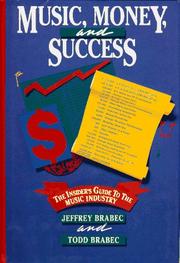
Music, money, and success
First published 1994. Subjects: Vocational guidance, Economic aspects of Music, Music, Music trade, Economic aspects.
eBay marketplace picks
Marketplace Samples
Example marketplace items related to this page. Use the search link to explore similar finds on eBay.
![Listing image for [NO EXTRA CUSTOMS TAX] Recording Studio LED Neon Light Sign Mic Music Wall Decor](/assets/images/marketplace-covers/86c5f6bdf13f08f4a38f.jpg)

Endnotes
1.
Source: ascap.com
Link:https://www.ascap.com/music-creators
Source snippet
Music CreatorsWhen ASCAP distributes royalties for a performance of your music, 50% goes to the writer(s), and 50% to the publisher(s). I...
2.
Source: blog.songtrust.com
Title: songwriting royalties explained writers vs publishers share
Link:https://blog.songtrust.com/songwriting-royalties-explained-writers-vs-publishers-share
Source snippet
Song Royalty Ownership: Writer's Share vs Publisher's Share16 May 2019 — A writer share is a portion of performance royalties that are pa...
Published: May 2019
3.
Source: GOV.UK
Title: Licensing bodies and collective management organisations
Link:https://www.gov.uk/guidance/licensing-bodies-and-collective-management-organisations
4.
Source: copyright.gov
Link:https://www.copyright.gov/music-modernization/faq.html
5.
Source: curveroyaltysystems.com
Link:https://www.curveroyaltysystems.com/royalties-101-publishing/lesson-6-sync-other-uses
6.
Source: wipo.int
Link:https://www.wipo.int/en/web/wipo-magazine/articles/running-up-that-hill-an-80s-hit-makes-millions-in-royalties-thanks-to-stranger-things-63628
7.
Source: cisac.org
Title: cisac global collections report 2025
Link:https://www.cisac.org/Newsroom/news-releases/cisac-global-collections-report-2025
8.
Source: ipo.blog.gov.uk
Title: music metadata matters how to get paid and credited
Link:https://ipo.blog.gov.uk/2025/04/26/music-metadata-matters-how-to-get-paid-and-credited/
9.
Source: ascap.com
Title: Welcome to ASCAP
Link:https://www.ascap.com/
10.
Source: ascap.com
Link:https://www.ascap.com/help
11.
Source: ascap.com
Link:https://www.ascap.com/songview
12.
Source: cisac.org
Title: prs music expands reach royalties across industry
Link:https://www.cisac.org/Newsroom/society-news/prs-music-expands-reach-royalties-across-industry
13.
Source: cisac.org
Title: cisac global collections report 2025
Link:https://www.cisac.org/cisac-global-collections-report-2025
14.
Source: blog.songtrust.com
Title: what are music royalties
Link:https://blog.songtrust.com/what-are-music-royalties
15.
Source: songtrust.com
Link:https://www.songtrust.com/music-publishing-glossary/glossary-performing-rights-organization
16.
Source: songtrust.com
Link:https://www.songtrust.com/the-mechanical-licensing-collective
17.
Source: songtrust.com
Link:https://www.songtrust.com/register-songs-for-music-publishing
18.
Source: blog.songtrust.com
Title: phonorecords iv agreement update
Link:https://blog.songtrust.com/phonorecords-iv-agreement-update
19.
Source: copyright.gov
Link:https://copyright.gov/licensing/m200a.pdf?ref=musicadmin.com
20.
Source: artists.spotify.com
Title: collecting mechanical royalties can be tricky the mlc is here to fix that
Link:https://artists.spotify.com/blog/collecting-mechanical-royalties-can-be-tricky-the-mlc-is-here-to-fix-that
21.
Source: curveroyaltysystems.com
Title: Lesson 2: Flow of Revenues in Music Publishing Royalties
Link:https://www.curveroyaltysystems.com/royalties-101-publishing/lesson-2-flow-or-revenues-in-music
22.
Source: prsformusic.com
Link:https://www.prsformusic.com/what-we-do
Source snippet
PRS for MusicWhat we doWe collect and pay royalties when a member's music is played in public, broadcast, downloaded, streamed, or perfor...
23.
Source: prsformusic.com
Link:https://www.prsformusic.com/licences/releasing-music-products/commercial-music-sync-licensing
Source snippet
PRS for MusicCommercial Music Sync LicensingThe composition/publishing rights (the words and [melody]({{ 'melody/' | relative_url }}) that make up the song) are owned by w...
24.
Source: prsformusic.com
Link:https://www.prsformusic.com/
Source snippet
PRS for MusicPRS for Music: royalties, music copyright and licensingWe pay royalties to our members for the use of their work while prote...
25.
Source: theguardian.com
Link:https://www.theguardian.com/business/2025/jul/04/songwriters-royalties-uk-gigs-prs-for-music
26.
Source: themlc.com
Link:https://www.themlc.com/
27.
Source: themlc.com
Title: phono 4
Link:https://www.themlc.com/faqs/categories/phono-4
28.
Source: diymusician.cdbaby.com
Title: DIY Musician Sync Licensing and Placement Guide
Link:https://diymusician.cdbaby.com/music-career/sync-licensing/
29.
Source: facebook.com
Link:https://www.facebook.com/PRSforMusic/posts/our-ceo-andrea-czapary-martin-reflecting-on-live-royalties-and-the-importance-of/1504353401060344/
30.
Source: facebook.com
Link:https://www.facebook.com/PRSforMusic/posts/more-music-more-creators-more-paid-%EF%B8%8F-107-billion-paid-%EF%B8%8F-over-86000-prs-members-p/1495330898629261/
31.
Source: theguardian.com
Title: kate bush running up that hill uk top 10 stranger things
Link:https://www.theguardian.com/music/2022/jun/03/kate-bush-running-up-that-hill-uk-top-10-stranger-things
32.
Source: youtube.com
Title: Kate Bush
Link:https://www.youtube.com/watch?v=wp43OdtAAkM
33.
Source: prsformusic.com
Title: how to understanding publishing rights
Link:https://www.prsformusic.com/m-magazine/how-to/how-to-understanding-publishing-rights
34.
Source: prsformusic.com
Title: 2024 financial results
Link:https://www.prsformusic.com/about-us/track-record/2024-financial-results
35.
Source: prsformusic.com
Link:https://www.prsformusic.com/sitemap.xml
36.
Source: linkedin.com
Link:https://www.linkedin.com/posts/dangopal_2025-prs-for-music-financial-results-activity-7455527072795471872-IaET
37.
Source: linkedin.com
Link:https://www.linkedin.com/posts/dean-ormston-99b964_if-youve-wondered-what-the-global-value-activity-7393759921101733889-_Zhz
38.
Source: apraamcos.com.au
Title: cisac releases global collections report
Link:https://www.apraamcos.com.au/about-us/news-and-events/cisac-releases-global-collections-report
39.
Source: Wikipedia
Title: PRS for Music
Link:https://en.wikipedia.org/wiki/PRS_for_Music
40.
Source: recordoftheday.com
Link:https://www.recordoftheday.com/news-and-press/more-music-more-creators-more-paid-prs-for-music-expands-the-reach-of-royalties-across-the-industry
41.
Source: teosto.fi
Title: CISAC Global Collections Report 2024
Link:https://www.teosto.fi/wp-content/uploads/2024/10/CISAC-Global-Collections-Report-2024.pdf
42.
Source: afrosoundtrack.com
Title: cisac 2025 african music royalty growth
Link:https://www.afrosoundtrack.com/cisac-2025-african-music-royalty-growth/
Additional References
43.
Source: youtube.com
Title: Explained: The Difference Between Master and Publishing Royalties
Link:https://www.youtube.com/watch?v=T6M-J4j30hU
Source snippet
Mechanical vs Performance Royalties: What Every Songwriter Needs To Know...
44.
Source: youtube.com
Title: Mechanical vs Performance Royalties: What Every Songwriter Needs To Know
Link:https://www.youtube.com/watch?v=gT8U78L3M9w
Source snippet
Music Licensing and Sync Explained for Artists...
45.
Source: federalregister.gov
Link:https://www.federalregister.gov/documents/2022/06/01/2022-11521/determination-of-rates-and-terms-for-making-and-distributing-phonorecords-phonorecords-iv
46.
Source: youtube.com
Title: How Music Royalties Work (Master vs Publishing)
Link:https://www.youtube.com/watch?v=l_aH9O-u28w
Source snippet
Explained: The Difference Between Master and Publishing Royalties...
47.
Source: researchgate.net
Link:https://www.researchgate.net/publication/354995982_Music_Creators%27_Earnings_in_the_Digital_Era
48.
Source: apraamcos.com.au
Link:https://www.apraamcos.com.au/
49.
Source: facebook.com
Link:https://www.facebook.com/AmericanSongwriterNews/posts/hoorayback-in-2022-the-us-copyright-board-approved-a-plan-to-gradually-increase-/1313580127477299/
50.
Source: ukmusic.org
Link:https://www.ukmusic.org/policy-campaigns/copyright/
51.
Source: facebook.com
Link:https://www.facebook.com/groups/Independent.Musicians.Network/posts/6324176784366323/
52.
Source: mpaonline.org.uk
Link:https://mpaonline.org.uk/resources/faqs/
Topic Tree