Within Metadata
Why DJ royalties are so hard to trace
DJ performances contain rapid blends, remixes, edits, and partial tracks, making old reporting systems struggle to identify who should be paid.
On this page
- Why DJ track use is harder to report
- How remixes and partial plays complicate matching
- What better tracklists could unlock
Page outline Jump by section
Introduction
DJ performances create a royalty problem that traditional music reporting systems were never designed to solve. A typical live band performs a relatively fixed set of songs that can be listed and reported afterwards. A DJ, by contrast, may play dozens of recordings in a single set, blend tracks together, use only fragments of songs, switch rapidly between versions, and incorporate remixes, edits and mashups that do not appear neatly in rights databases. As a result, collecting societies often know that music was played in a licensed venue but struggle to identify exactly which recordings and compositions generated the performance income. When identification fails, royalties can be delayed, distributed using estimates, or paid to the wrong creators.[PRS for Music]prsformusic.comPRS for MusicDJ royaltiesWe pay royalties for music that's played by DJs at licensed venues and festivals. We're able to pay these royalt…
 This challenge sits at the heart of music metadata. DJ culture depends on recordings made by other artists, so accurate payment relies on accurate track identification. The more complex the set, the harder it becomes to connect a real-world performance to the writers, publishers, performers and rights holders who should be paid.
Why DJ track use is harder to report
The basic royalty principle is straightforward: music is performed publicly, a venue licence generates royalty income, and that income should flow to the creators whose music was used. The difficulty lies in proving what was actually played. PRS for Music states that DJ royalties can only be paid correctly when accurate set lists are supplied by DJs or venue operators.[PRS for Music]prsformusic.comPRS for MusicDJ royaltiesWe pay royalties for music that's played by DJs at licensed venues and festivals. We're able to pay these royalt…
Unlike a concert setlist, a DJ performance often contains:
- Dozens of tracks within a short period.
- Rapid transitions between recordings.
- Simultaneous playback of multiple songs.
- Unreleased edits and promotional versions.
- Remixes with different ownership structures.
- Partial use of tracks rather than full performances.
A two-hour club set can easily contain more than fifty individual recordings. Identifying every one of them manually requires significant effort, and many DJs historically have not submitted detailed track reports. Even where reporting systems exist, participation rates can be low. APRA AMCOS, for example, encourages DJs to submit performance reports detailing what they played, precisely because payment depends on that information.[APRA AMCOS]apraamcos.com.auAPRA AMCOSHow to get paid as a dance and electronic writerIf you are a DJ, you need to complete Performance Reports to get paid for playi…
The result is a gap between licensed music use and documented music use. A venue may have paid for the legal right to host a DJ event, yet the royalty system may still lack enough information to determine who deserves the money.
How remixes and partial plays complicate matching
DJ culture relies heavily on reinterpretation. A single song may exist as an original version, radio edit, club mix, extended mix, bootleg edit, mashup and multiple official remixes. From a listener’s perspective these versions may sound related. From a rights-management perspective they can represent different recordings, different metadata records and sometimes different ownership claims.
This creates two matching problems.
Which recording was actually played?
An International Standard Recording Code (ISRC) identifies a specific recording rather than the underlying song. A DJ may play a remix that shares elements with the original work but has its own recording identity and royalty implications. If a report simply lists a song title, the system may not know which version generated the performance.[Revelator]revelator.comMusic Metadata 101: Why Music Metadata MattersLearn how complete music metadata is essential for royalties, credits, sync licens…
Was the song played long enough to identify?
Many DJ transitions involve only short excerpts. Tracks may be layered together, filtered, sped up, slowed down or heavily processed. Traditional reporting systems often relied on manually supplied information rather than direct audio analysis, making accurate identification difficult when songs appeared only briefly or in altered form. Electronic dance music presents particularly complex metadata challenges because of its extensive remix culture and live performance practices.[SSRN]papers.ssrn.comMusic Streaming Metadata Mapping ReportDJ-writers: complexity in creation and release process. Electronic Dance Music (EDM) presents…
Mashups add another complication. One performance segment might contain elements from multiple compositions and recordings simultaneously. Determining how royalties should be divided requires accurate identification before ownership questions can even be addressed.
Why estimates often replace exact tracking
When detailed track-level information is unavailable, collecting societies and distributors still need a way to allocate money. Historically, many systems have relied on sampling, extrapolation and proxy data rather than comprehensive reporting.
This approach emerged because gathering complete information from every club, festival and DJ set was impractical. However, proxy methods can favour music that is already heavily represented in mainstream datasets. Electronic music advocates have argued that this can disadvantage underground genres whose tracks rarely appear in radio playlists or other commonly sampled sources.[MusicRadar]musicradar.comApproximately £11.25 million is generated annually from UK electronic music events, with £8.89 million available for distribution after c…
The problem becomes especially visible in club culture. Fair Play research cited by industry reporting estimated that large amounts of nightclub royalty revenue may be misallocated because track-level reporting remains incomplete across much of the sector. The same reporting highlighted that music recognition technologies and detailed DJ tracklists are substantially more accurate than broad estimation methods, but remain far from universal.[MusicRadar]musicradar.comApproximately £11.25 million is generated annually from UK electronic music events, with £8.89 million available for distribution after c…
The debate is not merely administrative. When a producer’s track becomes a club favourite yet is never properly reported, the creator may receive little or no share of the performance income generated by its popularity.
What better tracklists could unlock
The industry has increasingly turned towards automated identification systems designed specifically for DJ environments. Rather than relying entirely on manual reporting, these systems analyse audio and compare it against databases of recordings.
PRS for Music works with DJ Monitor to collect music usage data from venues and events in order to improve royalty calculations.[PRS for Music]prsformusic.comPRS for MusicDJ royaltiesWe pay royalties for music that's played by DJs at licensed venues and festivals. We're able to pay these royalt…
Similar initiatives have expanded internationally. DJ Monitor’s technology has been adopted in clubs and festivals to identify tracks and improve reporting to collecting societies. Industry organisations promoting KUVO-powered monitoring systems argue that better identification can support fairer royalty distribution for producers and songwriters whose music drives nightlife culture.[djmonitor.com]djmonitor.comThe Amsterdam-based company DJ Monitor is…Read more… AlphaTheta Newer recognition systems are also being developed to identify tracks that are mixed[alphatheta.com]alphatheta.comdjs and clubs back kuvo powered by dj monitor for fair royaltiesFor too…Read more…, sampled or only partially played, addressing some of the weaknesses of older reporting approaches.[Audoo]audoo.comDJ RecognitionAudoo's DJ Monitoring solution ensures every track – whether played in full, mixed, or sampled – is identified and rep…
The key benefit is not merely automation. Better tracklists create a direct connection between performance data and rights ownership data. Once a recording can be identified accurately, royalty systems can attempt to match it to the correct songwriters, publishers, performers and recording owners. Without that first identification step, the payment chain often breaks before royalties reach the people who earned them.
Why DJ royalties remain a metadata problem
Many discussions about DJ royalties focus on licensing, but licensing is only part of the story. A venue can hold the correct licence, a collecting society can collect the money, and a royalty pool can exist, yet payment still depends on knowing what music was actually used.
That is why DJ performances remain one of the clearest examples of metadata determining who gets paid. Every unidentified remix, missing tracklist entry, unnamed edit or incomplete performance report creates uncertainty. Every accurate identification strengthens the connection between music usage and creator payment.
For live bands, the reporting challenge is often documenting a set of songs. For DJs, the challenge is documenting an evolving stream of recordings, versions, samples and blends. The complexity of that task explains why DJ sets have historically been difficult to convert into accurate royalties—and why improvements in track identification technology have become increasingly important to the music economy.[PRS for Music]prsformusic.comPRS for MusicDJ royaltiesWe pay royalties for music that's played by DJs at licensed venues and festivals. We're able to pay these royalt…[PRS for]prsformusic.comPRS for MusicDJ royaltiesWe pay royalties for music that's played by DJs at licensed venues and festivals. We're able to pay these royalt…
Amazon book picks
Further Reading
Books and field guides related to Why DJ royalties are so hard to trace. Use these as the next step if you want deeper reading beyond the article.
All You Need to Know About the Music Business
Provides the legal and royalty framework behind performance payments.
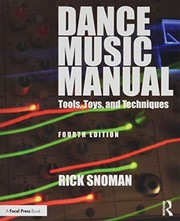
Dance music manual
First published 2012. Subjects: Remixing, Electronic composition, Electronic dance music, Sound recordings, Instruction and study.

How to make it in the new music business
First published 2017. Subjects: Music trade, Popular music, Music, Vocational guidance, Economic aspects.
eBay marketplace picks
Marketplace Samples
Example marketplace items related to this page. Use the search link to explore similar finds on eBay.




Endnotes
1.
Source: apraamcos.com.au
Link:https://www.apraamcos.com.au/resources/get-paid/how-to-get-paid-as-a-dance-and-electronic-writer
Source snippet
APRA AMCOSHow to get paid as a dance and electronic writerIf you are a DJ, you need to complete Performance Reports to get paid for playi...
2.
Source: revelator.com
Link:https://revelator.com/blog/musicmetadata101
Source snippet
Music Metadata 101: Why Music Metadata MattersLearn how complete music metadata is essential for royalties, credits, sync licens...
3.
Source: papers.ssrn.com
Link:https://papers.ssrn.com/sol3/Delivery.cfm/6575858.pdf?abstractid=6575858&mirid=1
Source snippet
Music Streaming Metadata Mapping ReportDJ-writers: complexity in creation and release process. Electronic Dance Music (EDM) presents...
4.
Source: musicradar.com
Link:https://www.musicradar.com/music-tech/uk-electronic-musicians-arent-getting-the-royalties-they-deserve-and-underground-scenes-are-subsidising-mainstream-producers-according-to-a-new-report
Source snippet
Approximately £11.25 million is generated annually from UK electronic music events, with £8.89 million available for distribution after c...
5.
Source: djmonitor.com
Link:https://djmonitor.com/inTheMedia/ParoolDJMonitor
Source snippet
The Amsterdam-based company DJ Monitor is...Read more...
6.
Source: alphatheta.com
Title: djs and clubs back kuvo powered by dj monitor for fair royalties
Link:https://alphatheta.com/en/information/djs-and-clubs-back-kuvo-powered-by-dj-monitor-for-fair-royalties/
Source snippet
For too...Read more...
7.
Source: audoo.com
Link:https://audoo.com/technology/dj
Source snippet
DJ RecognitionAudoo's DJ Monitoring solution ensures every track – whether played in full, mixed, or sampled – is identified and rep...
8.
Source: kuvo.com
Link:https://kuvo.com/partnership-with-djmonitor/
Source snippet
ed. The data is never shared publicly without consent and...Read more...
9.
Source: prsformusic.com
Link:https://www.prsformusic.com/royalties/dj-royalties
Source snippet
PRS for MusicDJ royaltiesWe pay royalties for music that's played by DJs at licensed venues and festivals. We're able to pay these royalt...
10.
Source: prsformusic.com
Link:https://www.prsformusic.com/what-we-do/who-we-work-with/dj-monitor
Source snippet
PRS for MusicDJ MonitorThe music data that is provided to PRS and PPL is used to calculate accurate royalties and doesn't impact public p...
11.
Source: prsformusic.com
Link:https://www.prsformusic.com/
Source snippet
PRS for Music: royalties, music copyright and licensingWe license the use of our members' music by businesses, online, in broadcasts and...
12.
Source: prsformusic.com
Title: how to understanding [publishing]({{ ‘publishing/’ | relative_url }}) rights
Link:https://www.prsformusic.com/m-magazine/how-to/how-to-understanding-publishing-rights
Source snippet
How to... understanding publishing rights14 May 2021 — Essentially, an MCPS royalty is generated every time your music is reproduced and...
Published: May 2021
Additional References
13.
Source: ekko.nl
Link:https://ekko.nl/wp-content/uploads/2024/04/Artist_DJ_Agent-KUVO-info-sheet.pdf
Source snippet
Empowering Music Through DataKUVO powered by DJ Monitor is a positive, creator-supporting initiative for club track identification for ro...
14.
Source: alibimusic.com
Link:https://alibimusic.com/blog/frequently-asked-questions-music-licensing?srsltid=AfmBOoqnp4hFJnYtUy-4p0I9TEWBsT0EFgDSabQxms9vAsaXhTWJdqav
Source snippet
Frequently Asked Questions – Music LicensingGeneral Music Licensing Questions. What is music licensing? Music licensing is obtaining lega...
15.
Source: linkedin.com
Link:https://www.linkedin.com/posts/jcbarat_the-opacity-of-music-royalties-isnt-a-tooling-activity-7459301240020234240-AOyD
Source snippet
Music Royalties Data Infrastructure ProblemThis tool allows rights holders to upload music that creators can use while sharing in monetis...
16.
Source: facebook.com
Link:https://www.facebook.com/groups/488915331311641/posts/1912478332288660/
Source snippet
Music licensing for stage showsFor pre-show, intermission, and post-show, ASCAP and BMI licenses will cover it. During a scene though, it...
17.
Source: tracklib.com
Link:https://www.tracklib.com/blog/music-[clearance
Source snippet
Sample Clearance Demystified: How to Clear a SampleThis in-depth guide walks you through the maze of clearing samples, licensing, and wha...
18.
Source: theguardian.com
Link:https://www.theguardian.com/music/2025/nov/18/musicians-wrongly-allocated-uk-royalties
Source snippet
Only 28% of fees paid by UK nightclubs are being correctly distributed to the creators of the music being played. This issue arises becau...
19.
Source: bmi.com
Link:https://www.bmi.com/licensing
20.
Source: youtube.com
Link:https://www.youtube.com/watch?v=xd–Phwhw50
Source snippet
Music Licensing Made SIMPLE For DJs and Producers!This is a follow-up to my YouTube short about the different types of music liceses that...
21.
Source: cisac.org
Title: prs press release ice and soundcloud reach multi territory licensing
Link:https://www.cisac.org/Newsroom/society-news/prs-press-release-ice-and-soundcloud-reach-multi-territory-licensing
Source snippet
PRS press release: ICE and SoundCloud Reach a Multi-...1 Nov 2016 — It now offers its users the functionality to add a wide range of ind...
22.
Source: streamify.ch
Link:https://streamify.ch/audio-recognition-live-dj-sets/
Source snippet
Streamify's advanced DJ Monitoring system identifies every track — whether played in full...Read more...
Topic Tree