Within Silence
How Performers Use Gesture to Shape Silence
Musicians use breaths, bow lifts, and pauses to signal intentional silence and guide audience perception.
On this page
- Breathing and instrument preparation
- Visual cues for ensemble coordination
- Timing and expressive pauses
Page outline Jump by section
Introduction
In live and ensemble performance, silence isn’t merely an absence of sound — it is an expressive component of the music that must be consciously shaped and communicated by performers. Physical gestures that mark silence serve both functional and expressive roles: they ensure that intentional pauses are heard as part of a cohesive musical expression rather than accidental gaps, and they help co‑performers coordinate timing in the absence of sound. Research in performance science and musical communication reveals that musicians use breath, body motion and visual signalling to signal rests, pauses and entries after silence, underscoring how deeply silence is woven into the performative fabric of music-making.[PMC]pmc.ncbi.nlm.nih.govBeating time: How ensemble musicians' cueing gestures…by L Bishop · 2017 · Cited by 80 — In the present study, we focus on the visu…
Breathing and Instrument Preparation
Performers’ bodies naturally anticipate moments of silence through preparatory gestures such as breathing, bow lifts and instrument management. In notation, a breath mark (often shaped like a comma) instructs a wind player or vocalist to inhale or take a momentary pause, and it cues string and keyboard players to create a brief stillness that shapes phrasing without disrupting tempo.[Wikipedia]WikipediaBreath markBreath mark
For wind and voice, breathing is intrinsically tied to phrasing: performers take breaths not only for physiological necessity, but as expressive indicators of closure and anticipation before and after silent spaces. Even pianists and string players will often use a visible preparatory breath or a subtle gesture before entering or re‑entering after a rest, signalling to ensemble partners that a silent passage has concluded and a new musical segment is imminent. These gestures align the physical readiness of the performer with auditory expectation, anchoring silent moments in shared bodily rhythm as much as in sound.
Similarly, a bow lift or repositioning by string players during rests is more than technical housekeeping; it visually demarcates silence as intentional. Though the breath mark in notation does not specifically command a bow lift, performers increasingly integrate such preparatory movements into expressive practice so that silence appears purposeful rather than accidental.[Wikipedia]WikipediaOpen source on wikipedia.org.
Visual Cues for Ensemble Coordination
Physical gestures are vital in ensemble settings to ensure shared interpretation of silence. When music includes long rests, fermatas (unspecified pauses), or general pauses for the entire ensemble, co‑performers must coordinate re‑entry precisely. Musicians thus exchange visual cues — head nods, eye contact, subtle body shifts — that act as non‑verbal communication channels during silence.[PMC]pmc.ncbi.nlm.nih.govMarch 1, 2015…
Empirical research using motion tracking in chamber duos has shown that visual cueing‑in gestures — such as rhythmic head movements or other bodily motion patterns — encode temporal information. Features such as acceleration peaks and gesture periodicity are interpreted by ensemble partners to anticipate beat position and tempo when no sound is present. Leaders in duet performance use these gestures to communicate timing before initiating sound, helping partners synchronise even after extended silent bars.[PMC]pmc.ncbi.nlm.nih.govJuly 30, 2020…
When regular auditory links are missing — for instance, after a long fermata or general pause — the visual channel becomes especially salient. Pianists have been shown to rely more heavily on visual cues when structural characteristics make acoustic timing ambiguous, indicating that performers consciously attend to one another’s visible movements to resolve silent intervals and prepare joint re‑entry.[PMC]pmc.ncbi.nlm.nih.govBeating time: How ensemble musicians' cueing gestures…by L Bishop · 2017 · Cited by 80 — In the present study, we focus on the visu…
Timing and Expressive Pauses
Beyond coordination, physical gestures around silence carry expressive meaning. In many performance traditions, a fermatas’ extended silence is shaped by the individual choices of the performer, and bodily cues before and during these pauses help communicate expressive intent.[PMC]pmc.ncbi.nlm.nih.govMarch 1, 2015…
In expressive duo and ensemble contexts, performers adapt their body motions — extending gestures that flow into silence or arresting motion during silences — to signal phrasing and narrative arcs in the music. Visual attention between performers, often maintained through gaze as well as body movement, confirms mutual anticipation of silent endings and incoming material.[arXiv]arxiv.orgBeyond synchronization: Body gestures and gaze direction in duo performanceJanuary 31, 2022… These coordinated gestures do more than mark time; they knit silence into the performative narrative and allow expressive shaping in partnership with co‑performers.
Practical Implications in Performance
For performers, mastering gestures that mark silence is part of developing sensitive ensemble interaction. Visible signals such as clear inhalations, eye contact prior to cueing, and consistent body motion patterns contribute to shared timing, especially when regular pulse cues are absent.[Wikipedia]WikipediaBreath markBreath mark
In orchestral and choral contexts, conductors take responsibility for signalling entries after silence, often using preparatory gestures and visual engagement — even subtle inhalations or gaze — to forecast the exact moment of sound. A conductor’s gestures thus bridge silent measures and reinforce synchronisation, showing that marking silence is a collaborative act that combines individual bodily preparation with group coordination.[Wikipedia]WikipediaOpen source on wikipedia.org.
Conclusion
Performers’ physical gestures that mark musical silence are mechanisms of musical communication, shaping how silence is perceived, coordinated and integrated into expressive performance. Through breath, preparatory movement, visual cueing and shared attention, musicians embed silence in the fabric of performance, ensuring it functionally aligns with ensemble timing and artistically enhances musical expression. These embodied gestures remind us that silence in music is not passive absence but a communicative event actively crafted and shared by performers.[PMC]pmc.ncbi.nlm.nih.govJuly 30, 2020…
Amazon book picks
Further Reading
Books and field guides related to How Performers Use Gesture to Shape Silence. Use these as the next step if you want deeper reading beyond the article.

The musician's way
Covers communication, ensemble coordination, preparation, and expressive performance skills.
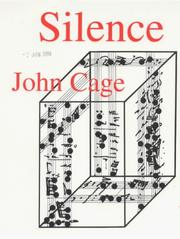
Silence: Lectures and Writings
Offers influential perspectives on performance, listening, and intentional silence.

Effortless Mastery
Addresses presence, listening, and expressive space in performance.

The Inner Game of Music
Focuses on awareness, timing, focus, and intentional control during performance.
eBay marketplace picks
Marketplace Samples
Topic-anchored marketplace searches for visual, collectible, or second-hand items related to this page.



Endnotes
1.
Source: pmc.ncbi.nlm.nih.gov
Link:https://pmc.ncbi.nlm.nih.gov/articles/PMC5718341/
Source snippet
Beating time: How ensemble musicians' cueing gestures...by L Bishop · 2017 · Cited by 80 — In the present study, we focus on the visu...
2.
Source: Wikipedia
Title: Breath mark
Link:https://en.wikipedia.org/wiki/Breath_mark
3.
Source: pmc.ncbi.nlm.nih.gov
Link:https://pmc.ncbi.nlm.nih.gov/articles/PMC4526249/
Source snippet
March 1, 2015...
Published: March 1, 2015
4.
Source: pmc.ncbi.nlm.nih.gov
Link:https://pmc.ncbi.nlm.nih.gov/articles/PMC7812619/
Source snippet
July 30, 2020...
Published: July 30, 2020
5.
Source: arxiv.org
Link:https://arxiv.org/abs/2201.13297
Source snippet
Beyond synchronization: Body gestures and gaze direction in duo performanceJanuary 31, 2022...
Published: January 31, 2022
6.
Source: Wikipedia
Link:https://en.wikipedia.org/wiki/Conducting
Additional References
7.
Source: researchgate.net
Link:https://www.researchgate.net/publication/274482414_Bodily_movement_and_facial_actions_in_expressive_musical_performance_by_solo_and_duo_instrumentalists_Two_distinctive_case_studies
Source snippet
Bodily movement and facial actions in expressive musical...29 Jun 2015 — In two studies this paper explores the expressive components of...
8.
Source: mtosmt.org
Link:https://mtosmt.org/issues/mto.09.15.5/mto.09.15.5.berry.html
Source snippet
MTO 15.5: Berry, The Importance of Bodily GestureTHE IMPORTANCE OF BODILY GESTURE IN SOFIA GUBAIDULINA’S MUSIC FOR LOW STRINGS MICHAEL BE...
9.
Source: academic.oup.com
Link:https://academic.oup.com/scan/article/16/1-2/31/5878975
Source snippet
of silence: an EEG study of how musicians time pauses in individual and joint music performance | Social Cognitive and Affective Neurosci...
10.
Source: researchgate.net
Link:https://www.researchgate.net/publication/270819472_Nonverbal_behaviours_in_popular_music_performance_A_case_study_of_The_Corrs
11.
Source: musicsymbols.me
Title: It represents a full measure of silence in most time signatures, partic
Link:https://musicsymbols.me/rest/
Source snippet
Music Rest Symbols and Their Meanings in Sheet MusicTYPES OF REST SYMBOLS WHOLE REST The whole rest looks like a small, solid rectangle h...
12.
Source: researchcatalogue.net
Link:https://www.researchcatalogue.net/view/1712958/2928941
Source snippet
rs which may include icons, gestures, flags, text, signs, pictograms, architecture, audience behavior, ri...
13.
Source: research.ceu.edu
Link:https://research.ceu.edu/en/publications/the-sound-of-silence-an-eeg-study-of-how-musicians-time-pauses-in
Source snippet
sound of silence: An EEG study of how musicians time pauses in individual and joint music performance - CEU Research Pure PortalJanuary 1...
14.
Source: hull-repository.worktribe.com
Title: supporting gestures breathing in piano performance
Link:https://hull-repository.worktribe.com/output/1318221/supporting-gestures-breathing-in-piano-performance
Source snippet
Existing research provides valuable insight into the importance of breathing for music performers and its function in supporting instrume...
15.
Source: instagram.com
Link:https://www.instagram.com/reel/DEEjXgHzWNg/?hl=en
Source snippet
ctions, control dynamics, and coordinate the ensemble's entrances and timing...
16.
Source: mtosmt.org
Title: MT O 18.1: Schutz, Looking Beyond the Score
Link:https://mtosmt.org/issues/mto.12.18.1/mto.12.18.1.schutz_manning.html
Source snippet
MTO 18.1: Schutz, Looking Beyond the ScoreApril 1, 2012 — LOOKING BEYOND THE SCORE: THE MUSICAL ROLE OF PERCUSSIONISTS’ ANCILLARY GESTURE...
Published: April 1, 2012
Topic Tree