Within Recording
How Listening to Recordings Reshapes Musical Memory
Listening to recordings reorganizes musical memory, associating songs with specific takes, room acoustics, and personal contexts.
On this page
- From Live Memory to Recorded Memory
- Personal and Intimate Associations
- Influence on Learning and Collecting
Page outline Jump by section
Introduction
Recorded music changed more than where and when people heard music. It changed what they remembered. When listeners can replay the same performance hundreds of times, memory becomes tied not only to a song but also to a specific recorded version, its sound quality, its acoustic space, and the circumstances in which it was heard. A live performance once existed primarily as a remembered event. Recording transformed musical memory into something repeatedly reinforced, revised, and personalised through playback. Research on music and memory shows that recorded music is an unusually powerful cue for recalling emotions, places, relationships, and periods of life, helping explain why certain recordings can feel inseparable from personal history. PMC[Durham University]durham.ac.ukwhy does music bring back memories what the science saysDurham UniversityWhy does music bring back memories? What the science…10 Mar 2023 — Music brings back memories of events, people and p…

From Live Memory to Recorded Memory
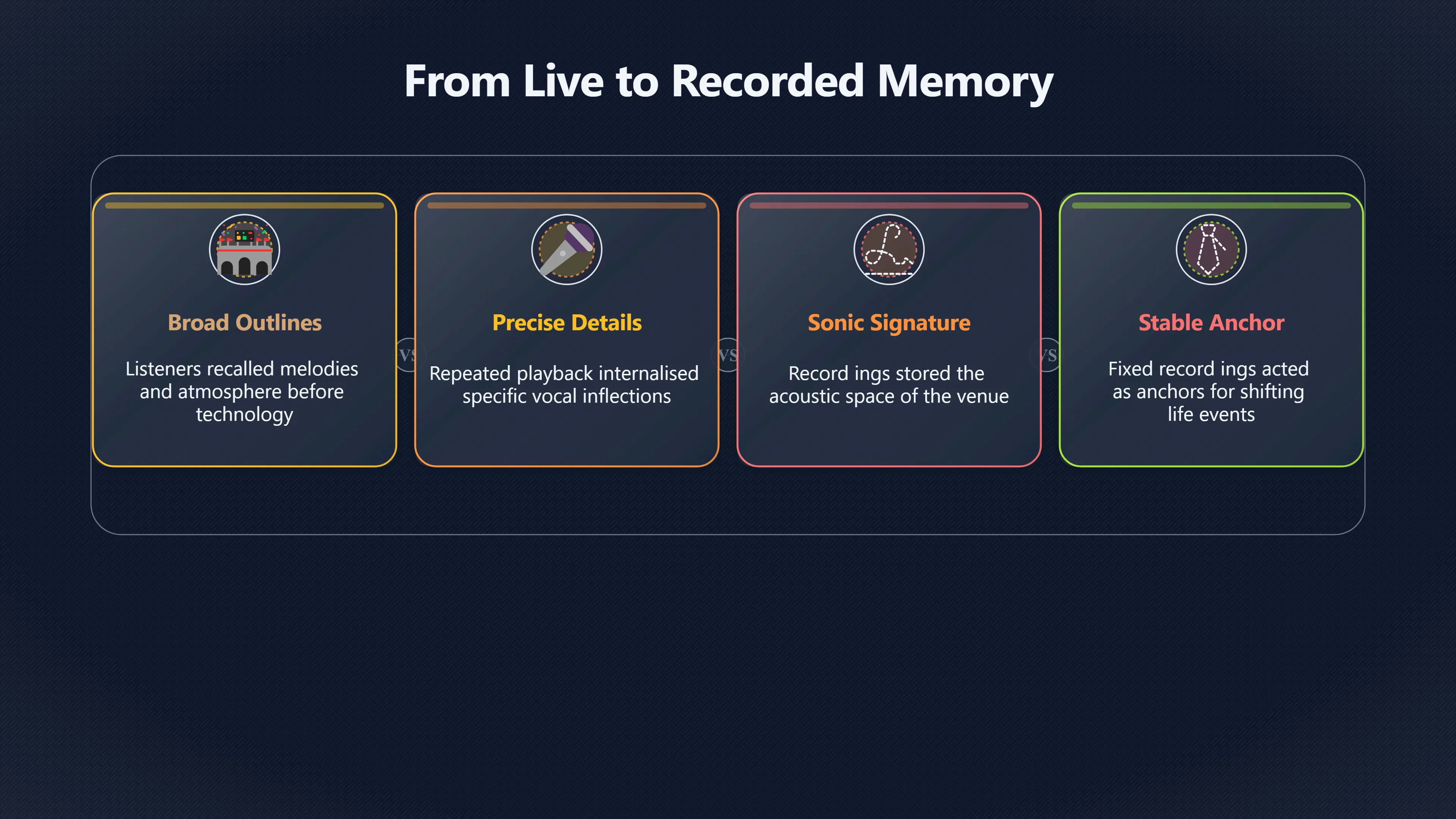
Before recording technologies became widespread, listeners usually remembered musical works in broad outlines. A melody, a singer’s style, or the atmosphere of a performance might linger, but exact details were difficult to preserve. Each new performance introduced variation, and memory adapted accordingly.
Playback altered this relationship. A recording could be heard repeatedly until listeners internalised precise details: a particular vocal inflection, a guitar solo, a tempo choice, even a momentary studio noise. Over time, many listeners came to regard a specific recording as the song itself rather than one interpretation among many. Scholars of recorded performance have noted that recordings are not merely captured live events but distinct musical objects shaped by studio decisions, editing, microphone placement, and production techniques.[cmpcp.ac.uk]cmpcp.ac.ukFrom Walter. Benjamin2 to Glenn Gould3 to Philip Auslander,4 musicians and…Read more…
This shift created a new kind of musical memory. Instead of remembering a composition abstractly, listeners often remember:
- A specific take rather than the underlying song.
- Particular production characteristics.
- The sonic signature of a favourite release.
- Familiar transitions, mistakes, or improvisations preserved on record.
Repeated playback strengthens these details through continual exposure. Research on musical memory suggests that auditory patterns become deeply encoded through repeated listening, making familiar recordings remarkably durable in memory.[PMC]pmc.ncbi.nlm.nih.govPMCMusic, memory and emotionNIHby L Jäncke · 2008 · Cited by 561 — Many researchers believe that music is encoded in the brain by the perceptual memory system…
The Memory of a Room
Recording also preserves acoustics. Listeners learn to recognise the sound of concert halls, studios, clubs, churches, or carefully engineered reverberation. A recording does not only store notes; it stores a sense of space.
As a result, memories can become attached to the ambience of a recording. The echo surrounding a singer’s voice, the closeness of a microphone, or the resonance of a performance venue become part of what listeners remember. When hearing the recording years later, they often recall not only the music but the entire sonic environment embedded within it.[cmpcp.ac.uk]cmpcp.ac.ukFrom Walter. Benjamin2 to Glenn Gould3 to Philip Auslander,4 musicians and…Read more…
Personal and Intimate Associations
One of the most significant consequences of recorded playback is its ability to connect music to personal experience. Researchers describe these experiences as music-evoked autobiographical memories: memories of events from a person’s life that are triggered by music, often involuntarily.[Sage Journals]journals.sagepub.comSage JournalsMusic-evoked autobiographical memories in everyday lifeby K Jakubowski · 2021 · Cited by 146 — Music can be a particularly e…[Durham University]durham.ac.ukwhy does music bring back memories what the science saysDurham UniversityWhy does music bring back memories? What the science…10 Mar 2023 — Music brings back memories of events, people and p…
A recording heard repeatedly during a particular period can become linked to:
- A relationship.
- A school year or university experience.
- A journey or holiday.
- A home, neighbourhood, or workplace.
- A major life transition.
Because recordings remain stable while life changes, they often act as anchors for memory. Hearing the same track decades later can reactivate emotional and sensory details that seemed forgotten. Studies consistently find that music is especially effective at cueing autobiographical memories and can evoke vivid recollections across the lifespan.[Sage Journals]journals.sagepub.comSage JournalsMusic-evoked autobiographical memories in everyday lifeby K Jakubowski · 2021 · Cited by 146 — Music can be a particularly e…[PMC]pmc.ncbi.nlm.nih.govPMCExploring the nature of music-evoked autobiographicalby M O’Shea · 2025 · Cited by 3 — Music-evoked autobiographical memories (MEAMs) are memories of past events that are triggered by mus…
Researchers have also found that many people possess a “self-defining” musical period, often linked to adolescence and early adulthood. Recordings encountered during these years tend to acquire exceptional emotional and autobiographical significance, helping shape identity and personal narrative.[PMC]pmc.ncbi.nlm.nih.govMusic-evoked autobiographical memories are associated with…by K Mehl · 2024 · Cited by 11 — One purported mechanism by which music…

Why Recordings Feel So Personal
Unlike many other cultural objects, recorded music often accompanies everyday activities rather than demanding full attention. Songs play during commutes, celebrations, heartbreaks, study sessions, exercise routines, and family gatherings.
Because of this, recordings frequently become woven into the background of lived experience. Scholars of media and memory have argued that personal music collections function similarly to photo albums or diaries, helping people preserve and revisit emotional episodes from their lives.[University of Warwick]warwick.ac.ukUniversity of Warwick Popular Music between Personal and Collective MemoryUniversity of WarwickPopular Music between Personal and Collective MemoryJanuary 8, 2015 — 14 Dec 2006 — Like photographs or diary entrie…
The effect can be so strong that listeners sometimes avoid particular recordings because they trigger unwanted memories, while others return repeatedly to songs associated with cherished experiences. Psychological research suggests that the emotional intensity attached to both music and life events helps strengthen these long-term associations.[PMC]pmc.ncbi.nlm.nih.govPMCThe self-defining period in autobiographical memoryby C Loveday · 2020 · Cited by 50 — This study is the first to demonstrate that a self-defining period (SP) for personally relevant mu…
Influence on Learning and Collecting
Playback changed not only what listeners remembered but how they learned music.
Before reliable recording, musicians often depended on notation, direct instruction, or repeated attendance at performances. Recordings introduced a new learning method: replay. A listener could hear the same phrase repeatedly, slowing the process of forgetting and increasing the accuracy of imitation.
This had several consequences:
- Musicians could memorise performances note for note.
- Stylistic details became easier to transmit across distance.
- Learners could compare their playing against a fixed reference.
- Particular recordings became models for future generations.
The result was a more detailed and standardised form of musical memory. Students increasingly learned not only songs but famous recorded interpretations of songs.
Collecting recordings reinforced this process. Building a library of records, tapes, CDs, or digital playlists created an external memory system. Collections organised musical experiences chronologically, emotionally, or socially. They allowed listeners to revisit specific periods of their lives through carefully preserved recordings, extending memory beyond the limits of recall alone.[University of Warwick]warwick.ac.ukUniversity of Warwick Popular Music between Personal and Collective MemoryUniversity of WarwickPopular Music between Personal and Collective MemoryJanuary 8, 2015 — 14 Dec 2006 — Like photographs or diary entrie…
Playback as a Tool for Reconstructing the Past
Recorded music does more than retrieve memories; evidence suggests it can reshape them. Recent research indicates that music accompanying recollection may influence the emotional tone attached to remembered events. In other words, playback can participate in the ongoing reconstruction of personal memory rather than simply unlocking a fixed archive of the past.[Georgia Tech]gatech.edumusic can change how you feel about pastGeorgia TechMusic Can Change How You Feel About the PastDec 2, 2024 — But recent research my team and I published suggests music may do m…
This helps explain why the meaning of a recording can change over time. A song associated with one event may later acquire new associations through repeated listening in different circumstances. Memory remains dynamic, but the recording provides a stable reference point around which those changing interpretations accumulate.
The ability of recordings to accompany memory across decades is one reason they occupy such a distinctive place in modern culture. Playback does not merely preserve music. It preserves opportunities for remembering, allowing listeners to revisit, reinterpret, and sometimes even remake parts of their personal histories through sound.[Sage Journals]journals.sagepub.comSage JournalsMusic-evoked autobiographical memories in everyday lifeby K Jakubowski · 2021 · Cited by 146 — Music can be a particularly e…[PMC]pmc.ncbi.nlm.nih.govPMCMusic, memory and emotionNIHby L Jäncke · 2008 · Cited by 561 — Many researchers believe that music is encoded in the brain by the perceptual memory system…
Amazon book picks
Further Reading
Books and field guides related to How Listening to Recordings Reshapes Musical Memory. Use these as the next step if you want deeper reading beyond the article.
This Is Your Brain On Music
Explains how music is encoded, remembered, and emotionally recalled.
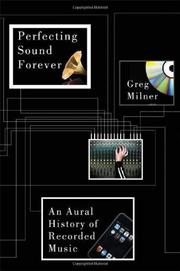
Perfecting Sound Forever
Shows how repeated playback reshaped musical expectations and memory.
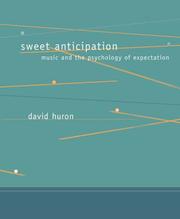
Sweet Anticipation
Helps explain how repeated listening influences perception and recall.
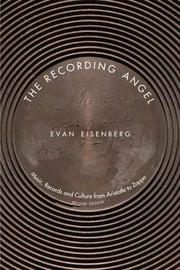
The recording angel
Addresses how recordings become the definitive versions people remember.
eBay marketplace picks
Marketplace Samples
Example marketplace items related to this page. Use the search link to explore similar finds on eBay.



Endnotes
1.
Source: pmc.ncbi.nlm.nih.gov
Title: PMCMusic, memory and emotion
Link:https://pmc.ncbi.nlm.nih.gov/articles/PMC2776393/
Source snippet
NIHby L Jäncke · 2008 · Cited by 561 — Many researchers believe that music is encoded in the brain by the perceptual memory system...
2.
Source: cmpcp.ac.uk
Link:https://www.cmpcp.ac.uk/wp-content/uploads/2015/11/PSN2013_Blier-Carruthers.pdf
Source snippet
From Walter. Benjamin2 to Glenn Gould3 to Philip Auslander,4 musicians and...Read more...
3.
Source: time.com
Link:https://time.com/6167197/psychology-behind-remembering-music/
Source snippet
We spend significant amounts of time listening to music, making it easier to recall [lyrics]({{ 'lyrics/' | relative_url }}) and melodies. The Heardle app leverages this b...
4.
Source: pmc.ncbi.nlm.nih.gov
Title: PMCExploring the nature of music-evoked autobiographical
Link:https://pmc.ncbi.nlm.nih.gov/articles/PMC12377674/
Source snippet
by M O’Shea · 2025 · Cited by 3 — Music-evoked autobiographical memories (MEAMs) are memories of past events that are triggered by mus...
5.
Source: pmc.ncbi.nlm.nih.gov
Link:https://pmc.ncbi.nlm.nih.gov/articles/PMC11245592/
Source snippet
Music-evoked autobiographical memories are associated with...by K Mehl · 2024 · Cited by 11 — One purported mechanism by which music...
6.
Source: pmc.ncbi.nlm.nih.gov
Title: PMCThe self-defining period in autobiographical memory
Link:https://pmc.ncbi.nlm.nih.gov/articles/PMC7583440/
Source snippet
by C Loveday · 2020 · Cited by 50 — This study is the first to demonstrate that a self-defining period (SP) for personally relevant mu...
7.
Source: durham.ac.uk
Title: why does music bring back memories what the science says
Link:https://www.durham.ac.uk/research/current/thought-leadership/2023/03/why-does-music-bring-back-memories-what-the-science-says/
Source snippet
Durham UniversityWhy does music bring back memories? What the science...10 Mar 2023 — Music brings back memories of events, people and p...
8.
Source: journals.sagepub.com
Link:https://journals.sagepub.com/doi/10.1177/0305735619888803
Source snippet
Sage JournalsMusic-evoked autobiographical memories in everyday lifeby K Jakubowski · 2021 · Cited by 146 — Music can be a particularly e...
9.
Source: warwick.ac.uk
Title: University of Warwick Popular Music between Personal and Collective Memory
Link:https://warwick.ac.uk/fac/arts/history/research/centres/ehrc/research/current_research/memory/jose_van_dijck.pdf
Source snippet
University of WarwickPopular Music between Personal and Collective MemoryJanuary 8, 2015 — 14 Dec 2006 — Like photographs or diary entrie...
Published: January 8, 2015
10.
Source: gatech.edu
Title: music can change how you feel about past
Link:https://www.gatech.edu/news/2024/12/02/music-can-change-how-you-feel-about-past
Source snippet
Georgia TechMusic Can Change How You Feel About the PastDec 2, 2024 — But recent research my team and I published suggests music may do m...
11.
Source: musicscience.net
Title: Music-Evoked Autobiographical Memories
Link:https://musicscience.net/research/music-memory/meams/
Source snippet
Journal of Applied Research in Memory and Cognition...Read more...
Additional References
12.
Source: facebook.com
Link:https://www.facebook.com/NautilusMag/posts/human-musical-memory-is-surprisingly-durable-babies-can-recognize-familiar-tunes/1184627757038223/
Source snippet
Human musical memory is surprisingly durableThis powerful connection between music and personal experiences is a real phenomenon known as...
13.
Source: violinist.com
Link:https://www.violinist.com/discussion/archive/10519/
Source snippet
Live Performance vs RecordingWe know that recordings have the potential to be played perfectly, whereas with life performances, errors ar...
14.
Source: musicandmemory.org
Link:https://musicandmemory.org/resources/
Source snippet
Music and the BrainBy using music as an external stimulus, we can activate pathways in the brain, helping to stimulate cognition, spark a...
15.
Source: bulletproofmusician.com
Link:https://bulletproofmusician.com/to-listen-or-not-to-listen-does-listening-to-a-recording-help-us-learn-faster-and-play-more-accurately/
Source snippet
Evidence That Listening to a Recording Could Accelerate...17 Jan 2016 — As an advanced student, listening to a variety of recordings can...
16.
Source: musicpsychology.co.uk
Link:https://musicpsychology.co.uk/musical-memory-survives-against-the-odds/
17.
Source: osf.io
Link:https://osf.io/preprints/psyarxiv/tk4gh
Source snippet
Previous research has shown that music evokes strong emotional responses that persist across the lifespan and over time.Read more...
18.
Source: amusictherapy.com
Title: this is why live music is more powerful than recorded music
Link:https://www.amusictherapy.com/post/2018/03/04/this-is-why-live-music-is-more-powerful-than-recorded-music
Source snippet
Why Live Music is More Powerful than Recorded Music4 Mar 2018 — There are three main areas where I believe live music carries an advantag...
19.
Source: durham-repository.worktribe.com
Title: music evoked autobiographical memories in everyday life
Link:https://durham-repository.worktribe.com/output/1280299/music-evoked-autobiographical-memories-in-everyday-life
Source snippet
worktribe.comMusic-evoked autobiographical memories in everyday lifeby K Jakubowski · 2019 · Cited by 146 — These music-evoked autobiogra...
20.
Source: theguardian.com
Title: The Guardian Does a song conjure painful memories?
Link:https://www.theguardian.com/science/2025/jul/26/does-a-song-conjure-painful-memories-try-to-rehabilitate-it-say-scientists
Source snippet
Try to rehabilitate it, say scientistsMany people associate specific songs with emotionally charged memories, both joyful and painful. Fo...
21.
Source: nypost.com
Title: New York Post Music doesn’t just evoke memories
Link:https://nypost.com/2024/12/22/lifestyle/music-can-change-how-we-remember-the-past-psychology-researcher-says/
Source snippet
In the study, participants memorized neutral stories and later recalled them while listening to positive music, negative music, or silenc...
Topic Tree